- IVI Valencia at a glance
- Who is behind the clinic?
- What patients love
- Where patients may have concerns
- Success rates, honestly presented
- The international patient experience
- Questions to ask before committing
- The verdict
- Frequently asked questions
- Where is IVI Valencia located?
- What treatments does IVI Valencia offer?
- How much does treatment cost at IVI Valencia?
- How is the clinic rated by patients?
- Does IVI Valencia treat patients from abroad?
- Are success rates verified?
- Is IVI Valencia the original IVI clinic?
- If you need help choosing an IVF Clinic Abroad – spare 3 minutes of your time. You will save at least a few hours.
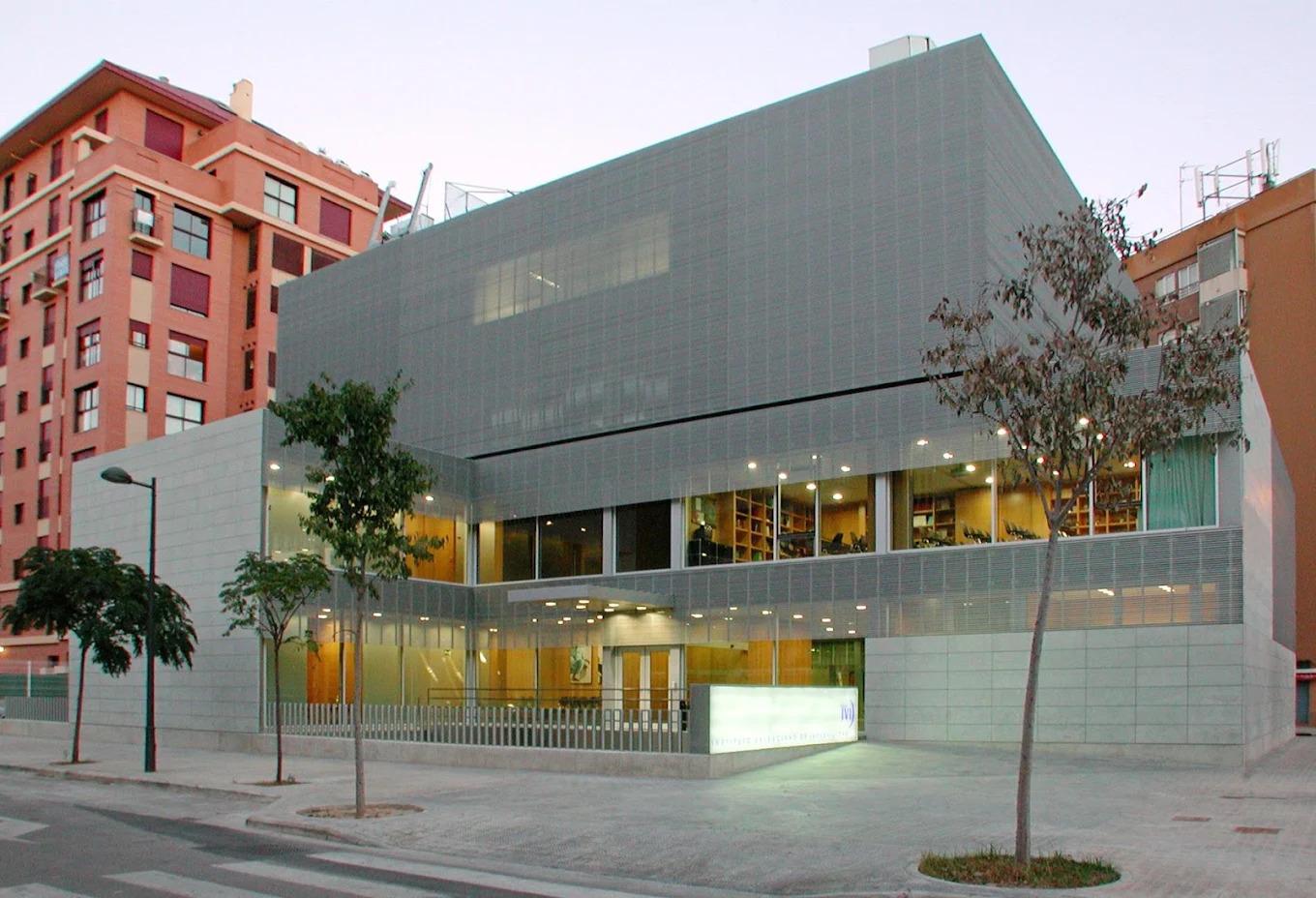
Every IVI clinic in the world traces back to this one. Two young gynaecologists opened it in a small rented space in Valencia in March 1990, the first clinic in Spain devoted entirely to infertility. Today the Valencia clinic occupies 3,500 square metres in the Campanar district, sees around 4,500 patients a year, and sits at the centre of a group with close to 80 clinics in nine countries and more than 250,000 babies born.
That heritage is the reason patients from Paris, London, Milan and Munich book flights here. It is also the reason the clinic can feel like a very well-run machine. This review looks at IVI Valencia through the eyes of a patient travelling from abroad: what the clinic offers, what patients praise, where the criticism lands, and the questions worth asking before you commit.
IVI Valencia at a glance
- Location: Plaza de la Policía Local 3, Campanar district, Valencia, next to the Campanar metro stop (lines 1 and 2) and about 10 to 15 minutes by taxi from Valencia airport
- Part of: IVI, founded in Valencia in 1990, now close to 80 clinics in nine countries, more than 250,000 babies born, around 22,000 treatments a year
- Status: The group’s original and largest clinic, with a 3,500 square metre building and around 4,500 patients a year
- Team: More than 60 professionals across ten medical units, including around 20 fertility gynaecologists, a dedicated egg donation programme, a maternal-foetal medicine department, reproductive surgery, urology and andrology, reproductive genetics and psychological support
- Treatments: IVF and ICSI, egg donation, double donation, IVF with PGT-A, artificial insemination, egg freezing, embryo adoption, ROPA for female couples, PRP for thin endometrium
- Guide prices: IVF from about €4,995, egg donation from about €6,995 (packages up to around €14,400 with guaranteed blastocysts), IVF with PGT-A from about €8,645, egg freezing from about €2,720, ROPA from about €5,995
- Google rating: 4.7 stars from more than 1,550 reviews, with 92% rated four or five stars
- Languages: English, French, German, Italian and Portuguese; a French-speaking international coordinator and a German-speaking doctor are named repeatedly in reviews
Who is behind the clinic?
Professors Antonio Pellicer and José Remohí were classmates at Valencia’s university hospital who had trained in the United States and came home convinced that Spain’s then-liberal fertility law gave them an opening. They started in a small unit in the Benimaclet neighbourhood, performed around 400 treatments in their first year, and ploughed every euro back into research. The clinic outgrew that building and moved to its current site in Campanar. In 2017 the group merged with the American RMA network to become the world’s largest fertility company. Both founders are still presidents of the group and both remain among the most cited researchers in reproductive medicine.
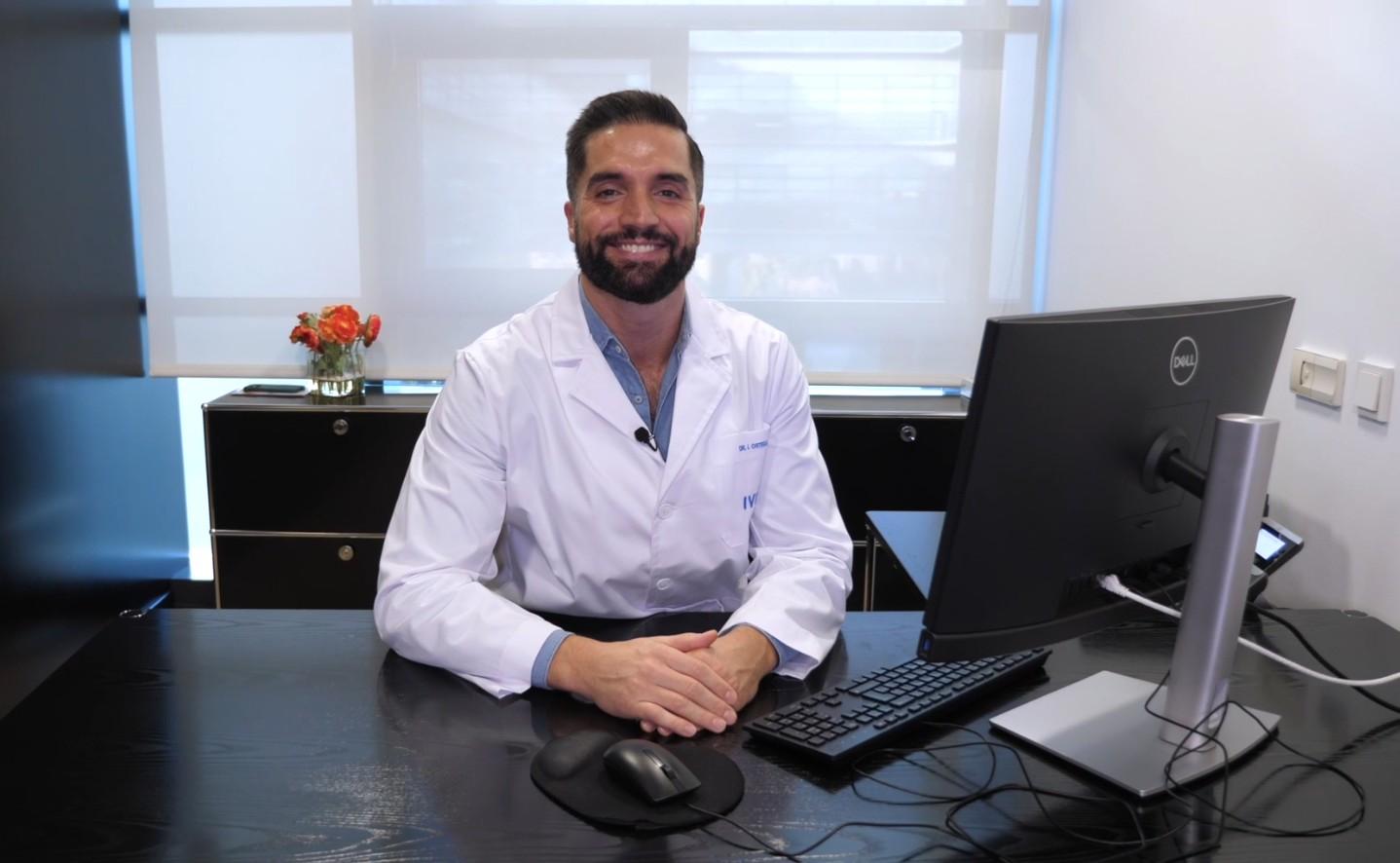
The Valencia clinic is run by Dr Ernesto Bosch. Born in Philadelphia, he trained in Valencia and at the University of Pennsylvania, joined IVI in 2000, became medical director of its reproduction unit in 2010 and has directed the clinic since 2019. He sits on the editorial board of Fertility and Sterility, the field’s leading journal, has published more than 80 peer-reviewed papers, and was on the task force that wrote the European ovarian stimulation guidelines every clinic on the continent now follows. If you have ever been told your stimulation protocol is “individualised”, there is a fair chance his research is why.
Around him is a bench of doctors that few clinics anywhere can match. Dr Pilar Alamá runs the egg donation programme. Dr Paula Celada is medical manager of the international department and appears in most French-language reviews. Dr Elena Labarta, Dr José Bellver, Dr Jessica Subirá, Dr Juan Giles, Dr Alicia Marzal, Dr Carmina Vidal and Dr Fabio Cruz are each thanked by name in dozens of reviews. Dr Jakob Doblinger looks after many German-speaking patients. A separate maternal-foetal medicine department, led by Dr Vicente Serra, follows pregnancies after a positive test, which is rare in a fertility clinic.
For patients this matters in a simple way: the people treating you here publish the evidence that other clinics follow.
What patients love
IVI Valencia has more Google reviews than almost any fertility clinic in Europe. We read the 400 most recent, covering September 2025 to October 2026. 365 of them are five stars. The pattern is hard to miss: patients name their doctor, name their nurse, and very often arrive after years of failure somewhere else.
That last point comes up in review after review. Patients from France, Italy, Germany, the UK and the Spanish public system describe getting pregnant here after multiple failed cycles at home. One British patient wrote in October 2026:
“After years of IVF in London I finally have a baby in my hands thanks to Dr Bosch and Dr Labarta. I could not be more thankful for their kindness, patience and determination to troubleshoot and resolve issues to get to a successful outcome. For anyone with recurring implantation failure and thin lining please try PRP offered at IVI Valencia, it’s the only thing that got me pregnant after years of failures with genetically normal embryos. For first time patients at IVI, I suggest doing all your treatments there instead of trying to do some in your home country, it’s just way less stressful and the clinic team are very well organised so everything runs like clockwork.”
IVI Valencia patient from the UK
French patients are the largest international group in recent reviews, and most of them thank the same two people, the international coordinator Carolina and Dr Labarta. One couple from Paris explained why Valencia worked where France had not:
“After two unsuccessful years with a first clinic in France, we embarked on the adventure in Spain, and it was truly a wonderful experience. In France, with my first clinic, everything was imposed upon me, whereas here I was given a choice. The entire team is very attentive and responds immediately to any questions. They do everything necessary to get feedback from your doctor in France, who is responsible for transferring the prescriptions, to avoid any delays.”
IVI Valencia patient from France
German-speaking patients tend to end up with Dr Doblinger. One woman who had tried in Prague and Germany before Valencia wrote:
“After 2 years and 4 failed attempts between Prague and Germany, I got my positive result on the first try at IVI, just 2 months after the first consultation. I still have excellent quality embryos for future pregnancies. We were always well informed at each stage, with an individualised protocol, which I didn’t have in the other countries. He truly listens to his patients.”
IVI Valencia patient from Germany
Other recurring compliments: a first consultation that produces a clear plan rather than a sales pitch, honest doctors who “never create false expectations”, nurses who answer medication questions the same day, follow-up that continues into pregnancy through the maternal-foetal unit, and a reception team that greets anxious patients with calm. A 46-year-old French patient with endometriosis and ovarian insufficiency, who had been through six inseminations and an IVF cycle at home, had her daughter after her second donor-egg transfer here and wrote that “despite the distance, the support was exceptional”.
Where patients may have concerns
IVI Valencia holds a 4.7-star rating from more than 1,550 Google reviews, the highest of the three big IVI clinics in Spain. Around 92% of all reviews are four or five stars, and roughly one in sixteen is a single star. The clinic replies to virtually every review, including the angry ones. Among the 400 most recent, 27 are one-star, and they cluster around four complaints.
The first is reaching a human. Several patients, Spanish and foreign, say the phone is rarely answered, the emergency line can ring out, and once treatment starts everything runs through the patient portal. One international patient wrote in September 2026:
“Once you have signed up, don’t expect to ever talk to a human again. They’ll only communicate with you through their portal, you are always dealing with a different person. It is very impersonal and you are feeling like you are in one big factory. Coordinators make plenty of mistakes, you need to really stay on top of every detail yourself.”
IVI Valencia patient
The second is the portal itself. One English-speaking patient complained that the app is only available in the Spanish app store, that messages are capped at around 300 characters, and that an urgent medication question therefore has to be chopped into fragments. He also felt that English comprehension among non-medical staff was weaker than a clinic with this many international patients should accept. Other reviewers praise the portal, so experiences clearly differ, but the point about phone access comes up often enough to take seriously.
IVF Abroad - Patient's Guide 2026
IVF Costs, Success Rates and Laws in 11 Countries Compared + Country Popularity Report.
IVF Abroad - Patient's Guide 2026
IVF Costs, Success Rates and Laws in 11 Countries Compared + Country Popularity Report.
Lost in clinic options? Talk to our IVF advisor.
We’ll help you find trusted IVF clinics abroad - tailored to your medical needs, budget, and treatment goals.
Looking for "best" IVF clinic abroad?
We analyse your needs, treatment type, destination preferences and find top IVF Clinics for you.
Compare IVF Programs Offered by Top Clinics
From IVF guarantees to medications, IVF laboratory techniques, and additional services (add-ons) - all in one place to help you choose with confidence.
The third is money and the way treatment is packaged. A handful of patients describe spending €15,000 to €20,000 without a baby and feeling that the clinic’s answer was always another cycle. One said the first online consultation advertised as free turned out to cost around €140. Others felt that multi-cycle packages were explained in their best light and the exclusions less so, and one couple who conceived naturally before using their third frozen embryo were unhappy with the storage renewal terms.
The fourth is diagnosis. More than one patient quotes the same line from a consultation, that the clinic is “not looking for a diagnosis, but might find the solution”. For some that approach is exactly right: get on with treatment rather than spend a year on tests. Others, especially those with endometriosis, adenomyosis or repeated failures, felt their history was not read closely enough and only learned what was wrong from a second clinic.
Even a satisfied couple expecting twins noted that their first in-person visit involved long waits, being passed between offices and a rushed consultation, before the rest of the process went smoothly. The scale that makes IVI Valencia so experienced is the same scale that can make a first visit feel like a production line.
Success rates, honestly presented
IVI reports every cycle to the Spanish Fertility Society registry, and the group says its results are audited by outside bodies. The clinic’s own headline is that its success rates sit 18 to 23 percent above the Spanish average, and that nine out of ten patients eventually take a baby home. Those are group marketing figures, and the second one counts cumulative attempts rather than a single cycle.
Valencia is large enough that the registry data mean something. The latest published ranges for the clinic show pregnancy per transfer in women under 35 using their own eggs at roughly 38 to 56 percent for fresh transfers and 54 to 66 percent for frozen ones, with frozen implantation rates of around 50 to 56 percent per embryo.
The clinic transferred a single embryo in about 91 percent of fresh cycles, which keeps the twin rate low and is a mark of a lab that trusts its own embryos.
Lost in clinic options? Talk to our IVF advisor.
We’ll help you find trusted IVF clinics abroad - tailored to your medical needs, budget, and treatment goals.
For comparison, across all Spanish clinics a fresh egg donation transfer leads to pregnancy around 57 percent of the time, a frozen donor transfer around 41 percent, and own-egg IVF under 35 around 22 percent per transfer. IVI’s own published figures for the group are higher still: around 64 percent per transfer for own eggs under 35 and around 70 percent for donor eggs. Whichever number you believe, Valencia sits comfortably in the top tier.
The honest reviews also say what the figures cannot. A couple who spent years and several cycles here without success wrote that they left “stranded and ruined”. A patient who had tried everything in London got pregnant only after PRP and extra progesterone. The same clinic, with the same lab, produced both stories. Ask for the live birth rate per transfer for your age and diagnosis, and ask how many cycles that figure is based on.
The international patient experience
Valencia airport is 10 to 15 minutes from the clinic and has direct flights from London, Manchester, Dublin, Paris, Milan, Rome, Munich, Frankfurt, Zurich, Amsterdam and most Spanish cities. The clinic sits beside the Campanar metro stop, two stops from the city centre, so you do not need a car. Valencia is cheaper than Madrid or Barcelona for hotels, has a beach, and in the waiting days between scan and transfer there is more to do than in most fertility destinations.
The process starts with an online consultation and a written plan. Monitoring can be done at home with your own gynaecologist, who uploads results to the portal; French patients in particular describe the clinic chasing their home doctor for prescriptions so that nothing slips. Own-egg IVF means two trips, one for egg collection and one for transfer. Egg donation means one trip of a few days. A partner agency can arrange airport pick-up and accommodation. Several patients recommend doing everything in Valencia rather than splitting monitoring between two countries, because the logistics then run “like clockwork”.
Who comes here and why:
- French patients are the largest foreign group in recent reviews. They come for egg donation without the long French waiting lists, for treatment past the French age limit, and because single women and female couples get the same service as everyone else. Communication in French is a given.
- UK and Irish patients come after NHS or HSE limits, for IVI’s lab and for second opinions on repeated implantation failure. Treatment runs in English, though one reviewer found English weaker among non-medical staff than expected.
- German, Austrian and Swiss patients come for egg donation, which is banned at home, and for PGT-A, which is heavily restricted. Dr Doblinger is the German-speaking point of contact.
- Italian patients come for donor eggs and for a kinder approach to older patients than many describe at home.
- US and Canadian patients come for prices that are a fraction of North American clinics even with flights and hotels.
Spanish law adds the usual advantages: anonymous donors screened to strict standards, a large and ethnically diverse donor pool with no waiting list, equal access for single women and female couples including the ROPA method, and treatment up to age 50 (IVI treats women up to 51). Unlike some IVI sites, the Valencia clinic is also open until 9pm three evenings a week and on Saturday mornings, which helps patients flying in for short visits.
Questions to ask before committing
Based on what past patients wished they had known:
- How do I reach a person in an emergency, and what happens if the emergency line is not answered? Get a direct number for your nurse or coordinator.
- Which doctor will I see, and will it be the same one at each visit? Reviews suggest the experience varies a lot by doctor, so it is worth asking for one by name.
- Does the portal app work in my country’s app store, and is there an email address I can use for anything longer than a few lines?
- Is the first online consultation free, and if not, what does it cost?
- Can I have a written, itemised quote before paying, including medication, freezing, storage, PGT-A, a frozen transfer and the storage renewal terms?
- What tests will you run before treatment, and what would make you recommend more investigation rather than another cycle?
- What is your live birth rate per transfer for my age and diagnosis, and how many cycles is it based on?
Good clinics answer such questions happily, and how a clinic responds tells you plenty.
The verdict
IVI Valencia is where modern Spanish fertility medicine was invented, and it still behaves like it. The lab is among the best in Europe, the doctors write the guidelines, the egg donation programme has no waiting list, results are independently registered, and the clinic treats international patients in five languages every day of the week. Patients who arrive after years of failure in Paris, London or Milan and leave with a baby are not a marketing story here; they are most of the reviews.
The price of all that is literal and figurative. Treatment costs more than at smaller Valencian competitors, the packages reward careful reading, and a minority of patients, mostly those whose cycles did not work, describe a clinic that was easy to pay and hard to phone. The scale that gives you a 20-doctor bench also means you may wait on your first visit and may never speak to the person who answers your portal message.
For patients who want the strongest possible medical team, fast donor eggs and a doctor who speaks their language, in a city that is easy to reach and pleasant to wait in, IVI Valencia belongs at the top of the shortlist. For patients who need a single familiar voice at the end of a phone, make that a condition before you sign, or consider a smaller clinic. An online first consultation reveals a lot, so ask up front whether it is free.
Frequently asked questions
Where is IVI Valencia located?
At Plaza de la Policía Local 3 in the Campanar district of Valencia, Spain, beside the Campanar metro stop and about 15 minutes from Valencia airport.
What treatments does IVI Valencia offer?
IVF and ICSI, egg donation and double donation, IVF with PGT-A genetic testing, artificial insemination, egg freezing, embryo adoption, the ROPA method for female couples, reproductive surgery and add-ons such as PRP for a thin endometrium.
How much does treatment cost at IVI Valencia?
Guide prices start at about €4,995 for IVF, €6,995 for egg donation, €8,645 for IVF with PGT-A and €2,720 for egg freezing, before medication. Multi-cycle egg donation packages with guaranteed blastocysts run from around €10,000 to €14,400, and a refund-guarantee programme is priced above €20,000.
How is the clinic rated by patients?
It holds 4.7 stars from more than 1,550 Google reviews, with around 92% rated four or five stars. Praise centres on the doctors, the organisation and results after failures elsewhere; criticism mostly targets phone access, the portal and package pricing.
Does IVI Valencia treat patients from abroad?
Yes, every day. The international department works in English, French, German, Italian and Portuguese, first consultations are online, and travel is limited to one trip for egg donation or two for own-egg IVF.
Are success rates verified?
Yes. Results are reported to the Spanish Fertility Society’s official registry and audited externally, rather than only self-published.
Is IVI Valencia the original IVI clinic?
Yes. IVI stands for Instituto Valenciano de Infertilidad, and the Valencia clinic, opened in 1990, was the first in Spain dedicated entirely to fertility treatment. Every other IVI clinic grew from it.
If you need help choosing an IVF Clinic Abroad – spare 3 minutes of your time.
You will save at least a few hours.
If you are looking for an egg donation clinic abroad, use the FertilityClinicsAbroad.com unique patients tool – Clinic Matching Test. We will analyse your needs and choose 3 overseas clinics which match your expectations. Our database of IVF centres includes only trusted fertility clinics that have experience in providing high-quality services to international patients. The suggested IVF centres will contact you directly within 1-2 working days. Spare 3 minutes of your time – you will save at least a few hours!