- IVI Alicante at a glance
- Who is behind the clinic?
- What patients love
- Where patients may have concerns
- Success rates, honestly presented
- The international patient experience
- Questions to ask before committing
- The verdict
- Frequently asked questions
- Where is IVI Alicante located?
- What treatments does IVI Alicante offer?
- How much does treatment cost at IVI Alicante?
- How is the clinic rated by patients?
- Does IVI Alicante treat patients from abroad?
- Are success rates verified?
- Is financing available for international patients?
- If you need help choosing an IVF Clinic Abroad – spare 3 minutes of your time. You will save at least a few hours.
IVI is the name most patients hear first when they start looking at IVF in Spain. The group was born in Valencia in 1990 and now runs close to 80 clinics in nine countries. IVI Alicante, open since 2005, is one of its smaller Spanish sites, and that is exactly why many international patients pick it: the muscle of a global group, delivered by a team small enough to remember your name.
This review looks at IVI Alicante through the eyes of a patient travelling from the UK, Ireland, Germany, Austria, France, the US or anywhere else abroad: what the clinic offers, what patients praise, where the criticism lands, and the questions worth asking before you commit.
IVI Alicante at a glance
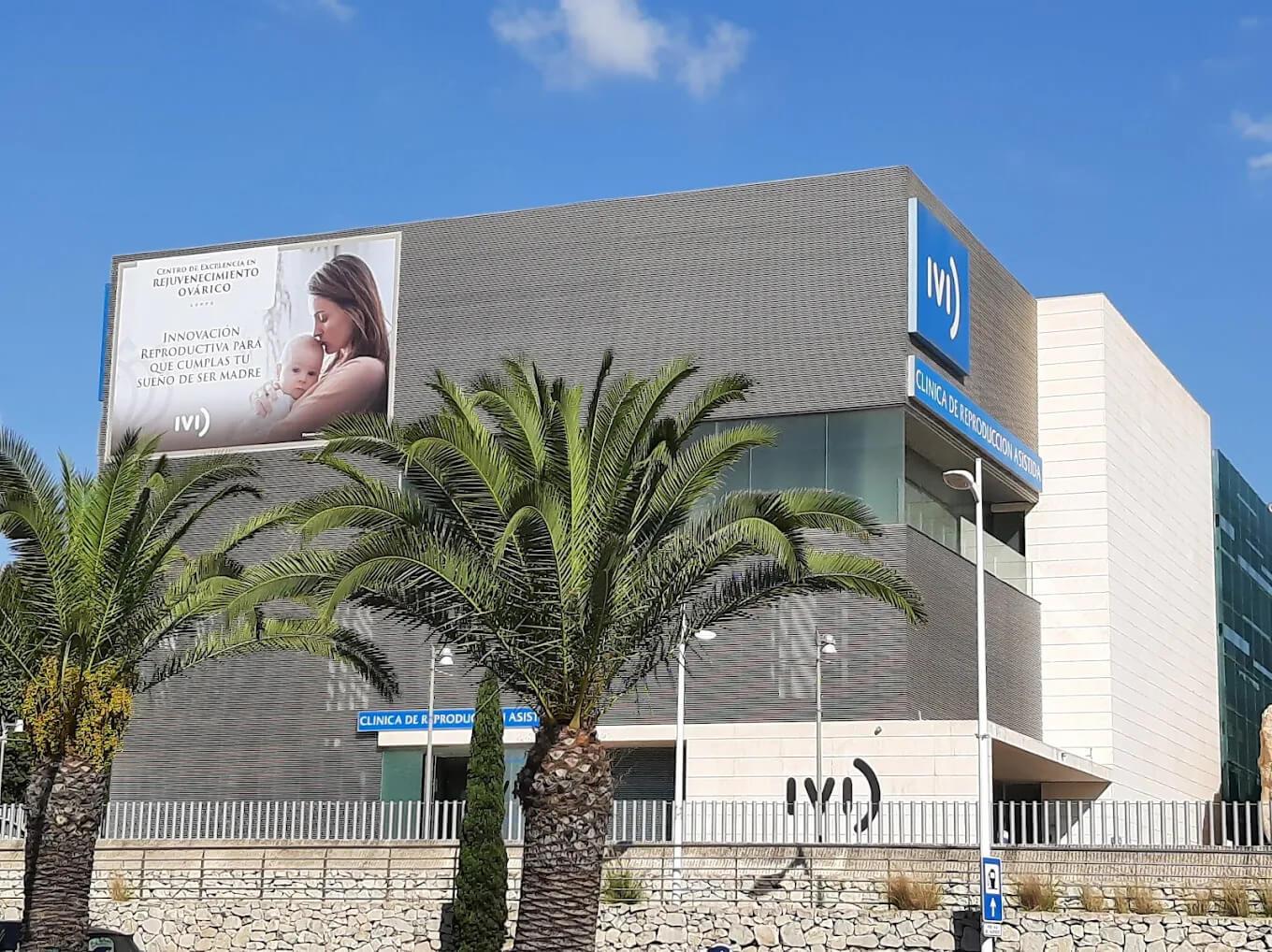
- Location: Avinguda de Dénia 111, Alicante, in the quiet Albufereta area north of the city centre, with free on-site parking (entrance via Calle Escultor Adrián Carrillo 1) and roughly 20 minutes from Alicante-Elche airport
- Part of: IVI, one of the world’s largest assisted reproduction groups, founded in Valencia in 1990, with close to 80 clinics in nine countries and more than 250,000 babies born
- Open since: 2005, under the same medical director for the entire 20 years
- Team: More than 60 professionals across ten medical units, including psychological support, endometriosis, reproductive surgery, reproductive genetics and haematology
- Treatments: IVF and ICSI, egg donation, IVF with PGT-A, artificial insemination, egg freezing, embryo adoption, ROPA for female couples, and ovarian rejuvenation techniques
- Special status: IVI’s Centre of Excellence in Ovarian Rejuvenation since 2021
- Guide prices: IVF from about €4,995, egg donation from about €6,995, IVF with PGT-A from about €8,645, egg freezing from about €2,720, ROPA from about €5,995
- Google rating: 4.4 stars from more than 160 reviews, with 87% rated four or five stars
- Languages: English, German and French, with a German-speaking doctor and patient coordinator and a French-speaking interpreter mentioned repeatedly in reviews
Who is behind the clinic?
IVI was founded by professors Antonio Pellicer and José Remohí, two of the most cited names in reproductive medicine. The group employs more than 2,500 people, runs seven research centres and helped develop the EmbryoScope time-lapse incubator now used in labs worldwide. Around a quarter of its treatments are for patients from abroad, and it has treated people from more than 180 countries.
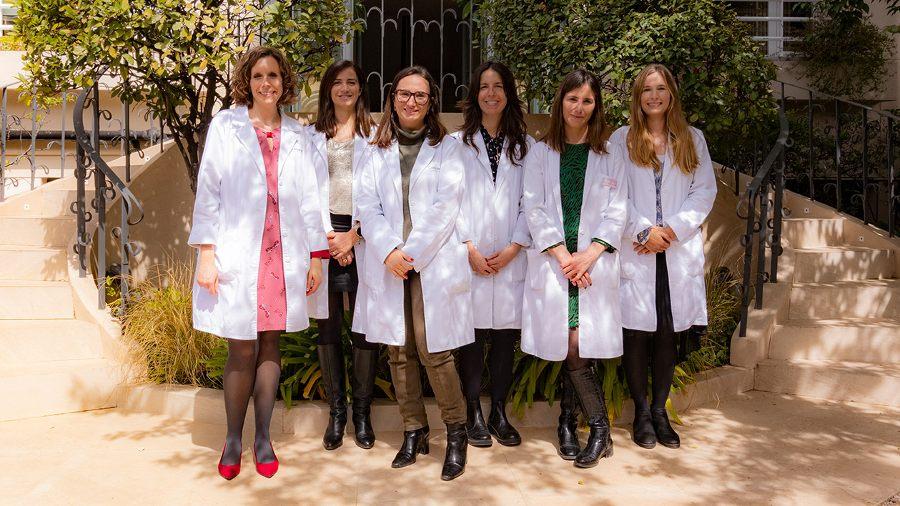
The Alicante clinic has been run by Dr Manuel Muñoz since it opened in 2005. He trained in medicine at the University of Alicante, specialised in reproductive medicine at IVI Valencia, directed IVI Almería for six years, and has taught on IVI’s master’s programmes in human reproduction since 2003. He is a member of the Spanish Fertility Society, ESHRE and the American Society for Reproductive Medicine.
Under him, the clinic became IVI’s Centre of Excellence in Ovarian Rejuvenation in 2021. That makes Alicante the group’s reference site for women with very low ovarian reserve or early ovarian failure, using techniques such as growth-factor-rich plasma injected into the ovary and the stem-cell based ASCOT protocol. These are still experimental, and the clinic itself describes them as add-ons for carefully selected patients rather than a first-line treatment.
The doctors international patients mention most are Dr Héctor Izquierdo, who speaks fluent German and features in most UK, German and Austrian reviews, Dr Rebeca Jiménez, Dr Zulyma Blanco and Dr Muñoz himself. Nurses and patient coordinators get named almost as often as doctors, which tells you something about how the clinic is run.
What patients love
We went through 160 Google reviews of IVI Alicante. 136 of them are five stars. Three themes come up again and again: the doctors, the feeling of being looked after as a person rather than a case number, and how smoothly treatment runs from abroad.
The word that appears most often from foreign patients is “smaller”. Many have already been to a big clinic at home and chose Alicante over IVI’s larger sites on purpose. An Austrian patient who had egg donation at 46 put it this way:
“I chose Alicante because it’s a smaller and therefore more personal clinic. It worked on the second try, and we are overjoyed. Communication between Austria and Spain via the portal was seamless. Paula and Dr Izquierdo always responded very quickly, and we were able to speak on the phone regularly. Both speak fluent German.”
IVI Alicante patient from Austria
British patients tend to arrive after a disappointing experience at home. One woman flew out because the NHS would not fund egg freezing before her endometriosis surgery:
“I previously visited a private clinic in the UK and was told I’d be lucky if I got 5 eggs. Dr Hector and his team have been nothing short of exceptional. It is because of him I doubled the probability with low AMH and have 10 eggs in the freezer.”
IVI Alicante patient from the UK
Another London-based patient, still mid-treatment when she wrote, described the contrast with two clinics at home:
“For the first time in this journey, I did not feel rushed, dismissed, or like a number. The patient portal is fantastic. The logistics and medication coordination are smooth. Even being London based and travelling back and forth to Spain has been incredibly easy. But what truly sets this clinic apart is the bedside manner, the humanity, and the feeling that every single person genuinely cares about you and your outcome.”
IVI Alicante patient from the UK
German-speaking patients, who make up a large share of the recent reviews, repeatedly praise the German-language support and compare the clinic favourably with home. One reviewer from Germany wrote that the ultrasound and lab techniques were “worlds better than in Germany”, and a couple who succeeded on their second attempt said the support in German was “excellent, questions were answered quickly, everything was straightforward and well-organised”. A French nurse who had treatment there vouched for the hygiene standards, and a couple from Ireland became parents after 17 years of trying and two failed cycles at home.
Other recurring compliments: quick starts once you decide, a patient portal that gets fast answers, free parking, and a calm, modern building that patients describe as feeling safe rather than clinical.
Where patients may have concerns
IVI Alicante has a 4.4-star rating from more than 160 Google reviews. That is a little below the 4.6 of its Madrid sister clinic, and the gap is explained by a cluster of one-star reviews: 19 of the 160 we read, against only two at two stars and three at four. In other words, patients here tend to either love the clinic or leave very unhappy, with little in between. The clinic replies to almost every review, including nearly all the critical ones.
The criticism follows a few clear patterns.
Continuity of care is the biggest one. Several patients describe seeing a different doctor at each visit, and three or more doctors over one treatment. A couple who went through the ROPA method wrote:
“We went through the entire ROPA process with IVI, having three transfers with negative results, each with a different doctor, no continuity whatsoever. Communication was only through an app if you didn’t have an appointment, and even then the doctor wouldn’t answer; they were doing it for him.”
IVI Alicante patient
The second theme is money, or rather how and when costs are presented. Reviewers mention a quote for embryo freezing presented at reception straight after egg collection, a price rising by €200 after a signed quote, an initial consultation fee charged before any prices are shared, and one couple quoted close to €20,000 for a full programme. One recent reviewer was also caught out by the fact that IVI’s 100% financing plans are only available to residents of Spain.
IVF Abroad - Patient's Guide 2026
IVF Costs, Success Rates and Laws in 11 Countries Compared + Country Popularity Report.
IVF Abroad - Patient's Guide 2026
IVF Costs, Success Rates and Laws in 11 Countries Compared + Country Popularity Report.
Lost in clinic options? Talk to our IVF advisor.
We’ll help you find trusted IVF clinics abroad - tailored to your medical needs, budget, and treatment goals.
Looking for "best" IVF clinic abroad?
We analyse your needs, treatment type, destination preferences and find top IVF Clinics for you.
Compare IVF Programs Offered by Top Clinics
From IVF guarantees to medications, IVF laboratory techniques, and additional services (add-ons) - all in one place to help you choose with confidence.
The third is how the clinic handles bad news. A few patients whose cycles ended with no viable embryos felt they were left waiting weeks for an explanation and treated with less warmth once the outcome was poor. One 43-year-old wrote that nobody had warned her that 21 eggs could still lead to zero usable embryos, and that the follow-up appointment came two weeks later with little explanation.
Even some five-star reviewers add a caveat. One wrote that “the service, while polite, can sometimes feel a bit impersonal, and during consultations they don’t always provide all the necessary information proactively, which means the patient has to ask many questions”. The Austrian patient quoted above said the same: come prepared with your questions, and don’t expect everything to be explained unprompted.
To be fair, several of the one-star reviews are not about treatment at all: one is about an egg donor’s experience during Covid, one is about a phone enquiry from the UK, and one refers to a visit 18 years ago. Strip those out and the picture is a clinic that most patients rate very highly, but which can feel process-driven if your case gets complicated.
Success rates, honestly presented
IVI reports its results to the Spanish Fertility Society registry every year, and the group says its outcomes are audited by independent bodies. That matters more than any headline figure on a website.
The group-level claim is that IVI’s success rates sit up to 18 to 23 percent above the Spanish sector average, and that its egg donation programme reaches a cumulative success rate of 99 percent over multiple cycles, with refund guarantees if no baby arrives. Treat those as marketing numbers: they describe the whole group, not one clinic, and the cumulative figure counts every positive pregnancy test rather than babies born. One critical reviewer made exactly this point, and she is right to.
For Alicante specifically, the registry data is thin because the clinic is a mid-sized site. It reports in the range of 100 to 500 cycles a year, with single embryo transfer used in close to 90 percent of fresh cycles and almost all frozen ones. Published ranges for women under 35 using their own eggs span roughly 30 to 80 percent pregnancy per transfer, which tells you the sample is small and the numbers bounce around from year to year.
A more useful yardstick is the Spanish average. Across all Spanish clinics, fresh egg donation transfers lead to a pregnancy around 57 percent of the time, frozen donor transfers around 41 percent, and own-egg IVF under 35 around 22 percent per transfer. IVI’s lab standards are among the best in the country, so you would expect Alicante to sit at or above those averages. But no clinic wins every cycle, and the honest reviews say so:
“My initial experience was a disappointment because it didn’t go well, but now you’re the best in my opinion because my baby is already 4 months old.”
IVI Alicante patient
Ask for the clinic’s own live birth rate per transfer for your age group and treatment type, and ask how many cycles that figure is based on. A good answer comes with both numbers.
The international patient experience
Alicante is one of the easiest fertility destinations in Europe to reach. The airport has year-round direct budget flights from most UK and Irish cities, from Germany, Austria, Switzerland, the Netherlands and Scandinavia, and the clinic is about 20 minutes away by taxi. The city itself is a beach resort rather than a capital, so hotels are cheap, the weather is mild even in winter, and the waiting days between scan and transfer are easier to fill than in Madrid.
Lost in clinic options? Talk to our IVF advisor.
We’ll help you find trusted IVF clinics abroad - tailored to your medical needs, budget, and treatment goals.
Treatment starts with an online consultation. Monitoring scans and blood tests can be done with a gynaecologist at home, with results uploaded to the patient portal that reviewers praise so often. Own-egg IVF then needs two trips, one for egg collection and one for transfer. Egg donation needs one trip for the transfer, sometimes just three or four days long. Medication is prescribed and coordinated remotely. A partner agency can book transport and accommodation if you want it done for you.
Who comes here and why:
- UK and Irish patients arrive after NHS and HSE age limits, long waits or a round of “unexplained” at home. Prices sit well below London’s for comparable treatment, especially for egg donation.
- German, Austrian and Swiss patients come mainly for egg donation, which is banned at home. Dr Izquierdo and the patient coordinator Paula both speak fluent
- German, and German is the language of a large share of recent reviews.
- French and Italian patients come for egg donation without the long waiting lists of their own systems, and for single women and female couples who are excluded or restricted at home.
- US and Canadian patients come for prices well below North American clinics even after flights.
Spanish law adds its own advantages. Donors are anonymous and screened to strict standards, the donor pool is large and ethnically varied, and there is no waiting list. Single women and female couples are treated on exactly the same terms as heterosexual couples, including the ROPA method where one partner provides the egg and the other carries the pregnancy. IVI treats women up to 51.
One thing to check before you go: recent patients report that IVI’s financing plans are only available to residents of Spain. International patients pay by card or transfer, usually in stages.
Questions to ask before committing
Based on what past patients wished they had known:
- Will I see the same doctor at every visit, and who covers when they are away? Continuity is the single most common complaint, so get a name.
- Can I have a full written, itemised quote before paying anything, including medication, ICSI, embryo freezing, storage, PGT-A and a frozen transfer? Several reviewers were surprised by add-on costs presented at reception.
- Is the quote fixed for the duration of my treatment?
- What happens if egg collection goes badly? Who decides whether to cancel, and when will I speak to a doctor about it?
- What is your live birth rate per transfer for my age and treatment, and how many cycles is it based on?
- Who is my point of contact between appointments, and how fast do portal messages get a reply from a doctor rather than an assistant?
- Which treatments on the IVI menu are standard and which are experimental add-ons, and what evidence is there for the add-ons you are recommending to me?
Good clinics answer such questions happily, and how a clinic responds tells you plenty.
The verdict
IVI Alicante gives you the IVI group’s laboratories, research and donor programme in a building small enough that nurses and receptionists get thanked by name.
For international patients, the combination of a German-speaking doctor, a patient portal that works, cheap flights and a beach town to recover in is hard to beat.
The stable leadership helps too: the same director for 20 years is rare in a group this size.
The price of all that is literal and figurative. Treatment costs more than at smaller Alicante competitors, quotes need careful reading, and a minority of patients, especially those whose cycles went wrong, felt the process where they wanted a person. The one-star reviews are few but they are serious, and they all point the same way: ask for continuity, ask for the full price, and ask what happens on a bad day.
For patients who want a top-tier lab, fast access to donor eggs and a doctor who speaks their language, in a destination that doubles as a holiday, IVI Alicante belongs on the shortlist. For patients with a complex history who need one doctor holding their whole case, make continuity a condition before you sign. An online first consultation costs little and reveals a lot.
Frequently asked questions
Where is IVI Alicante located?
At Avinguda de Dénia 111, in the Albufereta area of Alicante, Spain, about 20 minutes from Alicante-Elche airport, with free parking on site.
What treatments does IVI Alicante offer?
IVF and ICSI, egg donation, IVF with PGT-A genetic testing, artificial insemination, egg freezing, embryo adoption, the ROPA method for female couples, and ovarian rejuvenation for women with very low ovarian reserve.
How much does treatment cost at IVI Alicante?
Guide prices start at about €4,995 for IVF, €6,995 for egg donation, €8,645 for IVF with PGT-A and €2,720 for egg freezing, before medication. Ask for an itemised quote, since freezing, storage and extra transfers are usually billed separately.
How is the clinic rated by patients?
It holds 4.4 stars from more than 160 Google reviews, with 87% rated four or five stars. Praise centres on the doctors, the personal feel and the German-language support; criticism mostly targets changing doctors, cost transparency and communication after a failed cycle.
Does IVI Alicante treat patients from abroad?
Yes, daily. The team works in English, German and French, first consultations are online, and travel is limited to one trip for egg donation or two for own-egg IVF.
Are success rates verified?
Results are reported to the Spanish Fertility Society’s official registry and audited externally, rather than only self-published. Ask for the clinic’s own live birth rate for your age group.
Is financing available for international patients?
Recent patients report that IVI’s financing plans are only open to residents of Spain, so confirm this before you count on it. Patients from abroad pay directly, usually in stages.
If you need help choosing an IVF Clinic Abroad – spare 3 minutes of your time.
You will save at least a few hours.
If you are looking for an egg donation clinic abroad, use the FertilityClinicsAbroad.com unique patients tool – Clinic Matching Test. We will analyse your needs and choose 3 overseas clinics which match your expectations. Our database of IVF centres includes only trusted fertility clinics that have experience in providing high-quality services to international patients. The suggested IVF centres will contact you directly within 1-2 working days. Spare 3 minutes of your time – you will save at least a few hours!