IVF Over 50 in Spain – All You Need to Know

Although it is not possible to obtain a pregnancy spontaneously after the age of 50, some assisted reproduction techniques offer the opportunity to do so.
In Spain there is no law limiting the maximum age to be a mother, although it does specify that assisted reproduction techniques will only be performed when they do not pose a serious risk to the health, physical or mental, of the woman or possible offspring. For this reason, many IVF clinics do not accept women over the age of 50.
At CEFER Barcelona, we believe that treatments should be personalised, we follow other criteria to determine which patients to treat. Rather than using an arbitrary age limit, we use strict medical criteria to decide which women to treat.
Because of the patient selection we carry out, we avoid accepting those whom a pregnancy might actually pose a risk to them. Therefore, the incidence of complications is similar to that of women under 50. For example, a 45-year-old woman with certain medical characteristics (hypertension, overweight, etc.) may have a higher risk than a healthy 52-year-old woman. In this case, we would treat the 52-year-old patient and not the 45-year-old, because we only agree to treat her if she passes a series of tests that assure us that a pregnancy will not be dangerous for her health.
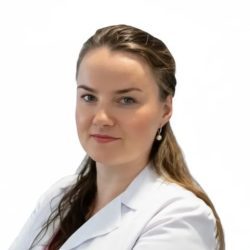

Dr Markus Nitzschke, CEFER Barcelona
Interview with Dr Markus Nitzschke
What are the legal and medical prerequisites for women over 50 seeking IVF treatment in Spain?
In Spain, there is no legal limit on the maximum age for motherhood. However, the law stipulates that assisted reproduction techniques should only be carried out if they do not pose a significant risk to the physical or mental health of the woman or the potential offspring. Consequently, many clinics do not accept women over the age of 50.
Our clinic accepts women up to the age of 55 who are in good health, as we have seen that the chances of success in terms of having a healthy baby in their arms are equal to those of younger women. It is very important that patients over the age of 50 who want to undertake IVF treatment have a referring gynaecologist who can follow them, not only during endometrial preparation, but also and especially during pregnancy.
What specific medical tests and assessments are required for women over 50 before beginning IVF treatment in Spain?
Women over the age of 50 who want to undergo treatment must perform:
- Cardiological examination and ECG
- Gynaecological ultrasound examination to exclude the presence of pathologies that may increase the risk of miscarriage/preterm delivery
- Diagnostic hysteroscopy to assess the degree of distensibility of the uterine cavity
- General haematochemical examinations to exclude renal, hepatic, pancreatic and thyroid pathology
Are there psychological evaluations as part of the qualification process for older women undergoing IVF?
The indication for psychological counselling in women who want to undergo reproduction techniques is independent of the woman’s age.
We collaborate with various external psychologists who are experts in IVF treatments to whom our patients from the UK, Germany, USA, etc. It is an external service that we can offer our patients and it is chargeable. Our staff offer online visits in order to be closer to the needs of patients.
We recommend psychological support if doubts arise during the first visit with us about accepting the heterologous fertilisation pathway. The greatest difficulty is metabolising the biological grief at not being able to achieve a pregnancy with one’s own genetic make-up and recognising a child obtained by heterologous fertilisation as one’s own. In these cases, psychological support serves to give tools for dealing with biological mourning and accepting the use of external gametes/embryos.

We suggest seeking psychological support if any doubts emerge during your initial visit regarding the acceptance of the donor egg IVF process.
Are there any lifestyle or health benchmarks that women over 50 need to meet to qualify for IVF treatment in Spain?
Women over 50 who want to perform reproductive techniques must be in good health (no obesity which means BMI should be less than 35, no hypertension and/or diabetes, etc.) and follow a healthy lifestyle (no smoking, no alcohol, regular physical activity, balanced diet, etc.)
What advice would you give to a woman over 50 to help her prepare for the qualification process for IVF treatment?
I would recommend a general check-up to exclude underlying pathologies. Have a visit with your gynaecologist to exclude that your uterus has pathologies such as fibroids that may increase the risk of miscarriage/preterm birth. Contact a nutritionist in order to set up a balanced diet that allows for a competent microbiotic, thus avoiding a state of dysbiosis. Carry out regular weekly physical activity (walking, running, swimming, tennis, etc.)
What are the most common reasons for the disqualification of women over 50 from IVF treatment?
These can be:
- Multiple operations on the uterus (for endometriosis, myomas or previous caesarean sections), which consequently result in a ‘frozen pelvis’ condition and an increased surgical risk in view of delivery.
- Uncontrolled essential hypertension associated with overweight/obesity that increase the risk of gestosis during pregnancy.
- History of uncontrolled type 1 diabetes mellitus associated with overweight/obesity which increase the risk of IUGR (Intra Uterine Growth Restriction).
How do success rates of IVF in women over 50 compare to younger age groups within Spain?
The success rate of fertilisation techniques in women over 50 is the same as in younger women.
Although women over age 50 who become pregnant via egg donation are at an elevated risk for developing obstetrical complications, their complication rates are similar to those of younger recipients, according to a study by Columbia University Medical Center researchers to be published in the February 2012 issue of the American Journal of Perinatology.
This is contrary to epidemiological data suggesting that these women are at greater risk of certain complications of pregnancy, including hypertension, gestational diabetes, premature birth, and placenta abnormalities. In the largest single-center study of older women who became pregnant from egg donation, Mark V. Sauer, MD; Daniel H. Kort, MD; and colleagues studied 101 women age 50 and over. They compared their pregnancy results with those of egg-donation recipients age 42 and younger.
The two groups were evaluated for significant differences in perinatal complications, gestational age at delivery, baby’s birth weight, and mode of delivery. Although the women all received their fertility treatment at Columbia University Center for Reproductive Care, their prenatal care and delivery often took place elsewhere.
The study concluded that all women who use egg donation to become pregnant are at an elevated risk for obstetrical complications, particularly hypertensive disorders and cesarean section; but women over age 50 do not appear to face any greater risk than their younger counterparts.
What specific challenges do women over 50 face during IVF treatment, and how are these addressed?
Many women over 50 have irregular cycles or are in menopause and are therefore concerned that assisted fertilisation techniques do not have the same success rate. This is simply not true, as scientific and clinical studies show: in fertilisation treatments with gamete donation, the success rate is independent of the woman’s age and hormonal status. You can check more information here.
Such situations are easily resolved by taking the contraceptive pill, which allows us to regularise the cycle and schedule treatment. In cases of menopause we perform a test cycle with oestrogen and progesterone to check that the endometrium responds correctly and at the same time allows us to plan treatment.

Irregular cycles are easily resolved by taking the contraceptive pill, which allows us to regularise the cycle and schedule treatment.
What are the ethical considerations in providing IVF to women over 50, from a medical perspective?
The ethical considerations that many women in their 50s express during the visit are:
- The worry of having only one child and not being able to cope with a second pregnancy.
- The worry of not having enough energy while raising a child, especially in the adolescent period.
What are the common misconceptions about IVF treatment for older women that you encounter in your practice?
The incorrect beliefs that many women over 50 have are as follows:
- Not being able to access treatment due to age limit.
- Lower success rate of assisted fertilisation techniques.
- Higher risks during pregnancy, regardless of one’s state of health, just because of one’s age.
Can you describe the typical protocol for IVF treatment for women over 50 in Spain?
The endometrial preparation protocol for an egg donation or embryodonation procedure includes:
- Administration of oestrogen in the form of tablets/gel or patches from day 1 of the natural or induced cycle
- Gynaecological ultrasound 7-9 days after starting oestrogen therapy to check the structure and thickness of the endometrium.
- If the endometrium is at least 6mm thick with a trilaminar structure, oestrogen is continued and vaginal progesterone ova are added 5 days before the transfer
Normally in women over 50 we give aspirin as a complementary treatment.
Can you share any success stories of women over 50 who underwent IVF treatment in Spain?
In my clinical experience, about 10% of the patients are older than 50 years and this trend is increasing. If I think back, there were very few patients over 50 (less than 1%) and, as the years went by, this figure slowly increased until the last 5 years where this increase has been greater for various social, cultural and ethical reasons.
For these reasons, I have several patients over the age of 50 who have had a baby born both with egg donation with the partner’s or donor’s sperm and also with embryo donation.
I also have women who have had breast cancer and after 5 years free of disease and consent from the oncologist for estrogen therapy they were able to realize their dream of being mothers
What are the risks associated with IVF for older women, and how can they be mitigated?
Conditions that can increase obstetric risk in women over 50 are:
- Essential hypertension in therapy.
- Type 2 diabetes mellitus on oral hypoglycaemic therapy.
In cases of hypertension, we request that the cardiologist modify antihypertensive therapy with the only drugs that can be used during pregnancy. This allows us not to have pressure peaks during the course and consequently compromise the treatment
In cases of type 2 diabetes mellitus, we require the diabetologist/endocrinologist to be aware of the woman’s desire to become pregnant so that they can plan any modification of hypoglycaemic therapy before the transfer or only afterwards.
What role do genetic screenings play in IVF treatments for older women?
The indication for genetic screening in assisted reproduction treatments over the age of 50 is the same as for all other women.
Indication for genetic matching for recessive genetic diseases: exclude that two people (donor and partner or donor and donor) are randomly carriers of 1 same or more identical genetic mutations, increasing the risk of a sick child by 25%.
Indication for PGT-A (pre-implantation screening diagnosis) on blastocysts: it is medical if an important male factor has been highlighted or it is elective by the patient/patients to verify that the blastocysts are chromosomally normal
Are there any recent advancements or technologies in IVF that particularly benefit older women?
There are no advances strictly in Assisted Reproduction techniques. What allows women over 50 to be able to face treatment and therefore pregnancy is the awareness of having to take care of their body and their health with correct lifestyles and regular physical activity.
Gynecologist-obstetrician colleagues are gaining more experience in managing pregnancies in women over 50 and as a result obstetric guidelines have been changed, as well as having new pregnancy risk screening tests that calculate the risk of pre-eclampsia and consequently, in these cases, there are new pregnancy follow-up protocols to prevent this condition from establishing or being recognized in time. So we can say that nowadays pregnancies of women over 50 are safer and more monitored.
How has the number of women of advanced maternal age undergoing IVF treatment in Spain changed over the years, and what factors do you believe are influencing this trend?
In the last 5-10 years, the number of women over 50 who turn to reproductive clinics to try to get pregnant has been growing. This is due to the better life perspective we have and the fact that more and more women give priority to studying, working and achieving economic stability in the first part of their lives, putting the desire for pregnancy on the back burner. Consequently, I believe that this trend will continue to increase.
About the Author:

Dr Markus Nitzschke
Dr Markus Nitzschke is a highly experienced fertility specialist, double board-certified in Obstetrics and Gynaecology and in Reproductive Endocrinology and Infertility. He trained at leading university hospitals in Strasbourg, Barcelona, Bern, and Bonn, and later specialized in Natural Cycle IVF under Dr. John Zhang at New Hope Fertility Center in New York and Dr. Kato at the Kato Ladies Clinic in Tokyo.
His work focuses on personalised, patient-centred fertility care, particularly for women with low ovarian reserve and those seeking gentler IVF approaches. Over the years, he has helped establish and lead IVF programmes in Europe, Asia, and Latin America, and has contributed to the development of fertility clinics and departments in several international institutions.
Dr Nitzschke is the co-author of a medical textbook on minimal stimulation and Natural Cycle IVF and regularly shares his expertise at international fertility conferences. He was also involved in setting up and facilitating the first IVF program in Europe offering exclusively Natural Cycle IVF at the University Hospital of Bern in Switzerland.
Fluent in German, French, Spanish, and English, he works daily at CEFER Barcelona with patients from around the world and is known for his thoughtful, individualised approach to complex fertility cases.