Pregnancy after repeated IVF Failure and mixed-factor infertility: Patient Success Story
This case describes a couple with a long history of infertility treatment, repeated IVF failure, poor ovarian response, and a significant associated male factor. The patient initially wished to attempt another IVF cycle using her own oocytes. However, after a very limited ovarian response during stimulation, the treatment strategy was adapted following medical discussion, leading to embryo transfer using donor oocytes and the partner’s fresh sperm sample.
Key Clinical Points
- Female patient aged 37 at initial consultation
- Diagnosis of adenomyosis
- Regular menstrual cycles and BMI of 20
- Six previous IVF cycles with poor ovarian response
- Most recent oocyte retrieval with no oocytes obtained
- Male partner aged 53 with obesity, hypertension, and type 2 diabetes mellitus
- Infertility classified as mixed-factor infertility
- Oocyte donation discussed as the primary recommended option
- Treatment adapted after monofollicular response during stimulation
- Positive pregnancy result and delivery at term by cesarean section
The female patient was 37 years old at the time of the initial consultation. She had a diagnosis of adenomyosis, regular menstrual cycles, and a BMI of 20. She reported no other relevant personal or family medical history.
Her partner was 53 years old at the time of the first visit and had significant comorbidities, including obesity, hypertension, and type 2 diabetes mellitus. He had two children from a previous relationship and reported no toxic habits.
The couple had undergone a total of six previous IVF cycles between the ages of 33 and 37 for her, all characterized by a poor ovarian response, with a maximum of 0 to 5 cumulus–oocyte complexes retrieved per cycle. Most embryo transfers were performed at day 3, with a total of five embryos transferred across cycles. The most recent oocyte retrieval resulted in no oocytes.
Given the clinical history, optimization of semen parameters was recommended prior to attempting further fertilization. Oocyte donation was also discussed as the primary recommended option.
However, the couple expressed a strong preference to attempt another cycle using their own gametes in Spain. Therefore, a new IVF cycle was planned using an antagonist protocol with recombinant FSH (rFSH) and hMG.
Interested in Reproclinic? Read more here >
Diagnostics – what was diagnosed with the woman and the man?
There was a significant male factor contributing to infertility classifying their infertility as mixed-factor infertility. Given the clinical history, optimization of semen parameters was recommended prior to attempting further treatments. Oocyte donation was discussed as the primary recommended option given the number of IVF failed attempts and poor response to stimulation.

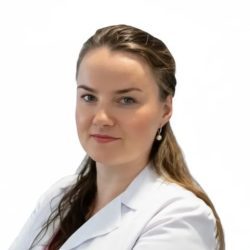
Dr Alicia Saborit
What protocols and procedures were used? What was done differently?
Possibilities were discussed with patients and treatment alternatives were recommended. However, the couple expressed a strong preference to attempt another cycle using their own gametes within a different laboratory in Spain. Therefore, a new IVF cycle was initiated using an antagonist protocol with recombinant FSH (rFSH) and hMG.
What were the results before an embryo transfer?
By day 8 of ovarian stimulation, a monofollicular response became clear. Although endometrial development and follicular growth were appropriate, the likelihood of achieving embryo transfer with a single follicle was considered very low. After thorough discussion with the couple, a decision was made to convert the cycle into an endometrial preparation for oocyte donation, using partner’s fresh sperm sample and planning for a fresh embryo transfer.
On stimulation day 11 (cycle day 12), the patient presented with one appropriately developing follicle measuring 16 mm, a triple-layered endometrium of 9.1 mm, and concordant hormone levels (estradiol 250 pg/mL, progesterone 0.4 ng/mL). Ovulation was triggered, and fertilization was scheduled using previously vitrified donor oocytes.
Intracytoplasmic sperm injection (ICSI) was performed using fresh partner semen. Sperm selection was carried out using density gradients, as the sample quality did not allow for microfluidic selection.
The Embryo transfer
One high-quality blastocyst (4AA) was obtained on day 5 and transferred. Two additional blastocysts (5AA and 4BB) were obtained on day 6 and cryopreserved.
Luteal phase support was provided with vaginal progesterone at a dose of 400 mg every 12 hours.
After the embryo transfer, pregnancy – details, result
A positive pregnancy result was achieved, with subsequent confirmation of an ongoing clinical pregnancy. Patient continued treatment for luteal phase support and began pregnancy follow up in her home country. The patient ultimately delivered her first child at term via cesarean section. She reported being diagnosed with gestational diabetes but no other complications.
How many couple in similar situation are treated in the Clinic? How common such medical background/situation is among the patients?
Patients with a similar clinical profile (maternal age, diminished ovarian response, and associated male factor infertility) are relatively common in our practice. A history of repeated IVF failure with poor oocyte yield is frequently observed in this group. The prognosis for achieving pregnancy with autologous oocytes is generally low although it may very depending on age group. Success rates improve significantly with the use of donor oocytes, which is often why it is recommended to at least discuss openly and honestly as an option with patients.
As physicians, we frequently care for couples who have been trying to conceive for many years and present with multiple contributing factors, such as diminished ovarian reserve and impaired sperm parameters. In these situations, decisions around changing reproductive cells, particularly the use of donor oocytes, are often emotionally complex and not taken lightly. As the treating physician, I always emphasize that “our role is to present a clear, honest, and evidence-based picture of the couple’s prognosis, while creating a space where sensitive topics can be discussed openly and without stigma.” Although male factor infertility may be present, advanced maternal age is often a primary determinant of outcomes, and in many cases, the use of donor oocytes offers the highest likelihood of success. Ultimately, our goal is to support patients in making informed decisions that are aligned both with their chances of achieving pregnancy and with their personal values and beliefs.
About the Author:
Dr Alicia Saborit graduated in Medicine and Surgery from the University of Elche in 2013. She later specialized in the field of reproductive health by completing a Master’s Degree in Reproductive Medicine at IVI Global Education in 2019, followed by a Master’s Degree in Reproductive Medicine, Gynecology and Endometriosis at the University of Navarra in 2021/2022.
Since 2017, Dr Saborit has been practicing medicine, building extensive experience in reproductive medicine and gynecology. She currently serves as the Medical Director of Reproclinic, where she is committed to providing personalized and high-quality patient care.
Dr Saborit speaks Spanish, Catalan, French, and English, allowing her to support and communicate effectively with international patients.