Ferrobelab Alicante – My Personal Review
Behind IVF Clinic Doors: My Visit to Ferrobelab International, Alicante, Spain
Some clinics impress you with their size. Ferrobelab International impresses you with its people.
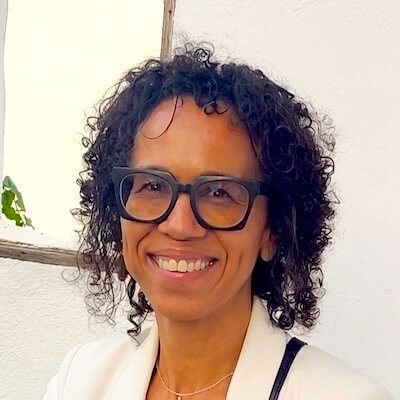
This was the very first episode of Behind IVF Clinic Doors, and I wanted to start somewhere close to my heart. I’ve lived in Alicante for many years. So I understand why more and more patients choose this city for their fertility journey. The medicine is strong, of course. But there’s also the sea, the Mediterranean sunshine and a slower pace of life. Everything here invites you to breathe out a little.
And then there’s something you rarely get to see on any clinic visit. Inside the Ferrobelab laboratory, we filmed a real embryo biopsy, performed live by embryologist and biopsy specialist Miguel Fernández. More on that below.
About Ferrobelab International
Ferrobelab is an independent fertility clinic in the centre of Alicante, founded in 2013 by Dr. Fernando Rodríguez Belmonte. He is still its Medical Director today.
Before opening his own clinic, Dr. Rodríguez spent more than 25 years working in both public and private medicine. He built Ferrobelab with one clear idea: more personal, patient-focused care, without giving up on medical excellence.
That shows in how the clinic runs. You’re looked after by the same doctor from your first consultation to the end of your treatment. And a large part of the team has worked together for nearly 13 years. That kind of stability is rare in healthcare, and you can feel it.
Here’s Ferrobelab at a glance:
- Location: Alicante, Spain
- Founded: 2013
- Medical Director: Dr. Fernando Rodríguez Belmonte (speaks Spanish, French and English)
- Treatments: IVF with own eggs, egg donation, donor sperm, ROPA, embryo donation, egg and embryo freezing, PGT-A genetic testing
- Donor programme: in-house egg donor bank, so there’s no waiting list to start
- Lab highlights: time-lapse embryo incubator, Witness traceability system, embryo biopsy for genetic testing
- Best for: patients who want continuity of care and a doctor they can actually reach
Arrival at the clinic
The first stop is reception. It’s a small front desk, and Marisa welcomed me very warmly. She helped me with a few formalities before we started the tour.
Then I met Gloria, the nurse who took my bloodwork. She’s calm, gentle and clearly very experienced. Several patients had already told me about her before my visit. Apparently she has a real gift for finding even the most difficult veins. If you’re someone who dreads blood tests, that’s worth knowing.
Medical consultation
Next came my consultation with Dr. Fernando Rodríguez.
For this visit, I put myself fully in the shoes of a patient coming in to discuss egg donation. So everything you see in the video is exactly what a real first consultation looks like.
Before talking about treatment at all, he went back over my medical history. My background, my situation, what had happened so far. Only then did he explain how the egg donation programme works and the steps it would involve for me.
One practical point stood out. Ferrobelab has its own donor bank. That means there’s no waiting time to start. For many patients, especially those who’ve already waited years, that matters a lot.
What I appreciated most was the way he talks. He’s direct and very clear. He doesn’t try to create false expectations. When you’ve been through a long fertility journey, that honesty is a relief.
We then moved next door for a pelvic ultrasound. He explained what he was seeing on the screen and why certain details matter before choosing a treatment plan. Back in his office, we went through the proposed protocol and its schedule together. It made every step of the journey feel very concrete.
And then one detail really surprised me. Before I left, he handed me his business card and told me I could contact him directly if I had any doubts. That level of closeness with your doctor is not something you find everywhere.
After that, I sat down with Marisa again. She walked me through the treatment options available to me, based on the doctor’s recommendations. Calm, present and never rushed.
The operating room and embryo transfer
Dr. Rodríguez then showed me the operating room. This is where egg collections and embryo transfers happen, along with procedures like hysteroscopy.
One thing I love here: you can follow the steps just before your own transfer. You see your embryo being prepared and loaded into the catheter. So you’re not just lying there wondering what’s going on. You get to watch the whole process up to the moment of transfer.
The recovery area
The clinic isn’t huge. But they’ve clearly thought hard about making patients feel comfortable.
The recovery room is built around a little indoor garden, which brings real softness to the space. Each private cubicle looks out onto it. And each one has its own bathroom. It’s a small detail, but it makes a big difference to how private and relaxed you feel after a procedure.
The IVF laboratory
Then we went behind the scenes, into the lab. And this is where the visit became truly special.
A live embryo biopsy
We were lucky enough to watch an embryo biopsy performed live by Miguel Fernández, embryologist and biopsy specialist, and one of the most respected embryologists in Spain.
He explained each step as he worked. First, a laser, shown as a small red dot on the screen, makes a tiny opening in the embryo’s outer shell. Then, very carefully, he draws out a few cells. These cells are sent to the clinic’s genetic laboratory for testing. The goal is to find the embryos that are genetically normal, so the one transferred has the best chance of becoming a healthy baby.
It takes real precision. You can see him adjust, pull gently, pause and try again until the sample is exactly right. When it’s done, the tiny piece of the embryo sits ready for analysis. The embryo itself is frozen within about half an hour, while the team waits for the genetic result. That result then decides whether the embryo is suitable for transfer.
Most patients never see this step. It happens behind closed doors, and you only get the results. Watching it made me realise how much skill sits between “we’ll test your embryos” and the report that lands in your inbox.
Inside the rest of the lab
The lab has separate workstations for each stage of IVF. There’s equipment for finding and preparing eggs, selecting sperm, fertilisation and embryo culture.
Embryos grow in incubators that keep conditions stable. Ferrobelab also has a time-lapse incubator. It films embryos as they develop, so they can be monitored without ever being taken out of their safe environment. Dr. Rodríguez showed me the footage of a blastocyst on screen. You can see every stage of its transformation. The one he showed me was, in his words, “perfect for transfer”.
Freezing and traceability with Fanny
Next I met Fanny, the head of the laboratory. She showed me two essential steps: vitrification and traceability.
She was freezing the embryos from the cycle we’d just seen biopsied. Embryos are frozen with a special culture medium and liquid nitrogen. She showed me the tiny carrier each embryo is placed on. It really is tiny.
Then she showed me the Witness traceability system. It tracks every single step in the lab. Every dish, every tube and every frozen embryo gets its own barcode. When an embryo is used, it’s scanned and the system confirms whose it is. The same happens with eggs and with sperm samples.
I asked Fanny what worries patients most about the lab. Her answer was simple. Couples want to be sure their genetic material will never be mixed up with anyone else’s. That their embryos are well looked after, clearly identified, and that there’s no room for confusion. With this system, every sample stays identified from start to finish.
Ferrobelab – Final thoughts
What struck me most at Ferrobelab was the feeling in the clinic. From the moment you arrive, you’re welcomed with kindness and simplicity, and you feel at ease very quickly.
I also loved the attention to comfort. It’s a human-scale clinic. But they’ve created a calm space, with private recovery areas looking onto a small inner garden.
Above all, I remember the people. Whether or not you speak Spanish, you immediately feel how available, kind and committed the team is. The atmosphere is almost like family. I think that comes from a team that’s been working together for nearly 13 years.
The continuity of care stands out too. You’re supported by the same doctor from beginning to end. And Dr. Fernando Rodríguez, the founder and Medical Director, stays personally reachable if you need him. In a journey this emotional, that’s rare and really reassuring.
Of course, every patient is different. Some people want a very large clinic or very specific technologies. Others care more about continuity, closeness with their doctor and a personal approach.
If you’re looking for a human-scale clinic with a full laboratory, an experienced team and a doctor who stays with you throughout, Ferrobelab deserves your attention. For me, it combines demanding medicine, real human warmth and an environment that feels calm and trustworthy.
I’d recommend booking a consultation to see if it’s the right fit for you.
Frequently asked questions about Ferrobelab
Where is Ferrobelab?
Ferrobelab is in the centre of Alicante, on Spain’s Mediterranean coast. Alicante has an international airport with direct flights from across Europe.
Who runs Ferrobelab?
The clinic was founded in 2013 by Dr. Fernando Rodríguez Belmonte, who is still its Medical Director. He has more than 25 years of experience in public and private medicine.
Does Ferrobelab have a waiting list for egg donors?
No. The clinic has its own donor bank, so you can start without waiting. Like all Spanish clinics, egg donation is anonymous by law.
Does Ferrobelab offer genetic testing of embryos?
Yes. Ferrobelab offers embryo biopsy for PGT-A. The biopsy is done in the clinic’s own lab by a specialist embryologist.
Will I see the same doctor throughout my treatment?
Yes. At Ferrobelab you’re followed by the same doctor from your first consultation to the end of your treatment.
Can I be treated in French or English?
Yes. Dr. Rodríguez speaks French and English as well as Spanish, and the team works with international patients every day.
Follow the Behind IVF Clinic Doors project and check other clinics’ reviews: