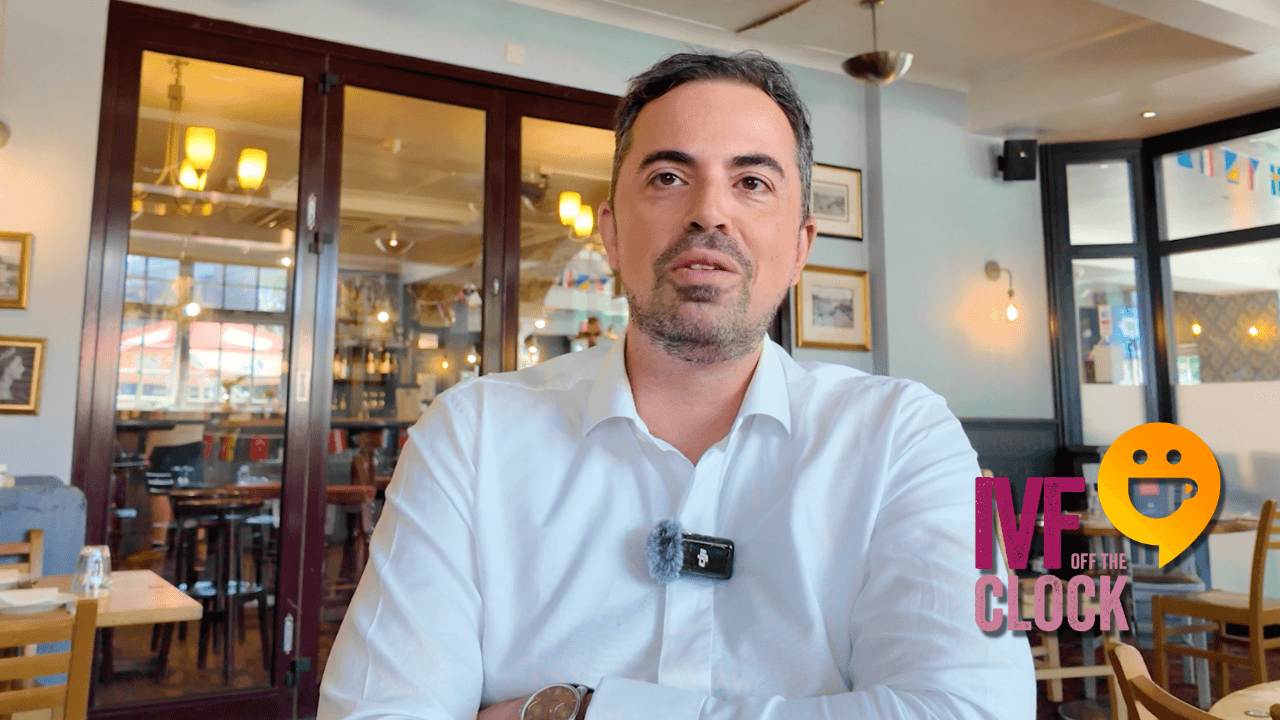
Dr Harry Karpouzis, Founder & Scientific Director, Pelargos IVF Fertility Group
Facing fertility treatment can bring so many questions, especially when IVF hasn’t worked as hoped, you’re considering treatment abroad, or you’re trying to understand what your results really mean. If you’re feeling overwhelmed or unsure what to ask next, you’re not alone — and understanding your options can be an important first step.
In this four-part IVF Off the Clock series, with Dr Harry Karpouzis, Founder and Scientific Director of Pelargos IVF in Athens, Greece, we discuss the questions that matter to patients navigating fertility treatment. Drawing on his experience in reproductive medicine in the UK and Greece, he discusses what to consider when having IVF abroad, how to weigh the advantages and disadvantages of PGT-A and embryo biopsy, and a memorable patient story involving zero fertilisation, ICSI, miscarriage and eventual success.
In the final episode, we explore some of the difficult questions that can arise after unsuccessful IVF cycles, including abnormal PGT-A results, sperm factors, endometriosis, frozen embryo transfer and repeated implantation failure. Dr Karpouzis explains what patients may wish to discuss with their fertility specialist when considering possible next steps.
Whether you’re preparing for your first IVF cycle or looking for answers after previous disappointments, these conversations are designed to help you feel better informed, ask more confident questions and take a more active role in decisions about your care. Every fertility journey is different, and no treatment can guarantee an outcome. Our hope is that these conversations help you approach yours with greater clarity, realistic expectations and the confidence to seek the answers you need.
Watch the full interview below to discover why successful fertility treatment is about more than medical expertise—it’s about building trust, providing reassurance, and supporting patients throughout every stage of their journey.
What inspires you most about working in fertility medicine?
What inspires me is that no two couples experiencing fertility difficulties are the same. Every couple has a different situation and needs an individual approach. Personalisation is very important in IVF, both when considering success rates and when deciding how to approach treatment. One of the most rewarding parts of my work is seeing a positive pregnancy test. It reminds me that this is more than a job: it is an opportunity to make a meaningful difference in people’s lives.
I also find it exciting to keep improving our approach, adapting technologies and developing laboratory practices. Reproductive medicine is a constant process of learning and becoming better.
What is your area of specialisation?
My main area of specialisation is reproductive medicine. I completed subspecialty training in the UK and have been accredited by the British Fertility Society for embryo transfer in assisted conception.
I also have a strong interest in endoscopic surgery, including laparoscopy and hysteroscopy. Combining surgical expertise with reproductive medicine is important because it helps inform decisions about when and how surgery may be appropriate for someone’s reproductive health.
What do patients usually ask before starting IVF at your clinic?
Feeling safe, protected and supported is extremely important when undergoing treatment in another country. Patients often want to know who will perform the egg collection and whether they will be treated by the doctor they have consulted. They also want to understand who will prepare their treatment protocol and why a particular approach has been recommended.
At Pelargos IVF, we assign a coordinator to each couple, providing a point of contact throughout the process. Patients may also ask about laboratory technology, whether PGT-A is an option in their case, and how egg donors are selected. Egg collection can understandably cause anxiety because it is a procedure performed under sedation. Patients may want to know where the procedure takes place and what facilities are available.
Clear information and transparency are important in helping patients understand what to expect.
What treatments do patients from the UK typically seek at Pelargos IVF?
We see patients seeking a range of treatments. Many people who travel to us have already undergone IVF in their home country without success, so we often see more complex cases. These may include recurrent implantation failure, recurrent miscarriages and cases where patients are seeking further assessment of possible immunological factors.
Egg donation is another common reason patients travel to Greece. Some patients also enquire about treatments such as ovarian rejuvenation, PRP and stem cell-based approaches, which Dr Karpouzis notes may be harder to access in the UK. These treatments vary in their evidence base and suitability, so patients should discuss the potential benefits, limitations and uncertainties with a qualified specialist before making decisions.
How is egg donation treatment organised for patients travelling from the UK?
The process usually begins with an initial consultation, during which the clinic reviews the patient’s medical history. Patients then receive detailed information about the proposed treatment and costs. Once they decide to proceed, a coordinator guides them through the necessary consent forms and documentation.
For patients hoping to use fresh donor eggs, Dr Karpouzis describes an approach that usually involves an initial trip to Greece lasting one or two days. During this visit, any remaining tests can be completed, and a partner may provide a sperm sample for freezing if needed. Some preliminary testing can also be arranged through collaborating services in the UK.
After the initial visit, patients can return home while the donor search and matching process takes place. The clinic sends the donor profile for approval, and the eggs are fertilised with sperm to create embryos, with blastocyst development and the subsequent treatment plan depending on the individual case.
The preparation of the uterine lining is arranged according to a personalised protocol.
How many trips to Greece are needed for donor-egg IVF?
The number of trips depends on the treatment plan and whether fresh or frozen eggs are used. One common approach involves two visits:
First visit: One or two days for the initial appointment, testing and other preparations.
Second visit: Two or three days around the embryo transfer.
Patients may be able to start medication to prepare the uterine lining while still in the UK, reducing the time they need to spend in Greece. For those who cannot travel twice, a single trip of at least seven days may be possible, although coordinating treatment with fresh eggs can be more difficult.
The schedule should be agreed with the clinic in advance, as individual circumstances can affect travel and treatment arrangements.
Does the clinic offer both fresh and frozen donor eggs?
Yes. We work with egg banks and can also freeze eggs from our own donors. It is important to distinguish between fresh versus frozen eggs and fresh versus frozen embryo transfer. These refer to different stages of treatment. Dr Karpouzis states that fresh and frozen embryo transfers do not make a difference to success rates according to the evidence he refers to, while the use of fresh or frozen eggs may make a small difference. Patients should discuss the available evidence and the options relevant to their individual situation with their fertility specialist.
The clinic offers different treatment packages so patients can consider which arrangements best suit their needs and circumstances.
How long does it take to find an egg donor?
The time required depends on the type of donor arrangement and the matching criteria. Matching a patient with a donor usually takes around two months, although it may take less or more time. Factors such as blood group and physical characteristics can influence the matching process.
Patients should ask their clinic about current donor availability and the likely waiting time for their specific requirements.
How is IVF with your own eggs organised for patients travelling from the UK?
I start with an initial consultation. After that, I send the patient the relevant information, and the couple decides whether they would like to proceed with treatment with us. Once they book, I put them in touch with our coordinator, and we go through all the necessary paperwork. Depending on their individual circumstances, I may recommend vitamins or supplements and help them understand when to start treatment and how to schedule everything.
Timing is important. We consider whether to use a natural cycle, start after taking the contraceptive pill, or use oestrogen priming. The most appropriate approach depends on the individual case. Patients have two main options. They can stay in Greece for approximately 14 days, starting from the first day of their period, to complete the process here. Alternatively, I can arrange for them to receive their medication and begin treatment in the UK. We work with collaborating clinics where they can have their ultrasound scans locally.
IVF Abroad - Patient's Guide 2026
IVF Costs, Success Rates and Laws in 11 Countries Compared + Country Popularity Report.
IVF Abroad - Patient's Guide 2026
IVF Costs, Success Rates and Laws in 11 Countries Compared + Country Popularity Report.
Lost in clinic options? Talk to our IVF advisor.
We’ll help you find trusted IVF clinics abroad - tailored to your medical needs, budget, and treatment goals.
Looking for "best" IVF clinic abroad?
We analyse your needs, treatment type, destination preferences and find top IVF Clinics for you.
Compare IVF Programs Offered by Top Clinics
From IVF guarantees to medications, IVF laboratory techniques, and additional services (add-ons) - all in one place to help you choose with confidence.
Patients send us their blood test results and scan reports on the same day. I review the results and adjust medication doses when needed. They can have their first, second and third monitoring scans in the UK, then travel to Greece for approximately three or four days for egg collection. Both approaches are possible, and we can discuss which is more suitable for each patient.
How many trips to Greece are needed, and how long do patients need to stay?
It depends on the treatment plan and whether we proceed with a fresh or frozen embryo transfer. If we plan a fresh transfer, patients may need to travel only once. They might stay for a minimum of six or seven days, although the stay could extend to around 20 days if they complete the entire process in Greece.
More commonly, we freeze the embryos. In that situation, the first trip could last approximately two weeks if patients complete the whole process in Greece. If they start treatment in the UK, they may only need to stay in Greece for three or four days for egg collection. They would then return for the frozen embryo transfer, usually staying for another two or three days. The exact arrangements depend on the treatment plan, so I recommend discussing the likely travel schedule with the clinic before booking flights or accommodation.
Do you offer both fresh and frozen embryo transfers?
Yes, we offer both, although the vast majority of our transfers are frozen nowadays. One reason is that we use PGT-A testing in many cases, and embryos need to be frozen while the genetic testing is carried out. There is also evidence suggesting that frozen embryo transfers can offer comparable, and in some circumstances better, chances of success. A frozen cycle allows hormone levels to settle before the embryo is transferred, which may be beneficial in some cases.
The decision between a fresh and frozen transfer should be individualised. I consider the patient’s circumstances and treatment plan when deciding which approach may be appropriate.
Who can have PGT-A testing in Greece?
PGT-A is not available to every patient in Greece. There are regulations and a national authority that oversees IVF treatment, and eligibility depends on the applicable rules. As I explained in the interview, women over the age of 38 may be eligible. PGT-A may also be permitted for women who have experienced recurrent miscarriages or recurrent implantation failure.
Patients in these categories need to apply to the national authority for permission in advance before we can proceed with testing. Women under 38 who do not have a relevant history of recurrent miscarriage or implantation failure are not eligible under the rules I described. The same restrictions apply to egg donation. Because eligibility and regulatory requirements can change, patients should confirm the current rules and their individual eligibility with their clinic before planning treatment.
How is the PGT-A process organised, and how long does it take?
We need to apply for permission in advance. Patients usually receive a decision within a month at most, so I advise them to plan their treatment at least one month ahead to give us time to organise everything. There is a specific application procedure through the national authority. Patients need to provide the required blood test results, including karyotypes, which are particularly important. I sometimes see patients planning PGT-A without having had a karyotype test, and that can create problems.
Once the necessary permission is in place, the treatment follows the usual IVF process. We collect the eggs, fertilise them and allow the embryos to develop until day five. Before freezing the embryos, the laboratory takes a biopsy for genetic testing using next-generation sequencing, or NGS. The results usually come back in approximately ten working days.
It is also very important to have the appropriate documentation and genetic counselling to help patients understand their PGT-A results. I encourage patients to speak with a geneticist so they can make informed decisions about their options.
What happens if PGT-A identifies mosaic embryos rather than euploid embryos?
A euploid embryo has the expected number of chromosomes, while a mosaic embryo has a mixture of cells with different chromosome patterns. Nowadays, it may be possible to consider transferring certain mosaic embryos rather than automatically discarding them. In the interview, I discussed potential pregnancy chances of approximately 20%, 30% or 40%, depending on the circumstances.
The important point is that patients need to understand the potential chances and risks before making a decision. We can discuss whether transferring a particular mosaic embryo is an option, taking the individual findings into account. Genetic counselling is especially important in these situations because the results need to be interpreted carefully and in the context of the patient’s circumstances.
If a patient has PGT-A, how many times will they need to travel?
PGT-A is part of the IVF process, but it means that the embryo transfer will take place in a later frozen cycle. Patients first travel for the egg collection and embryo creation stage, unless they complete some of their initial monitoring in the UK. We then wait for the genetic testing results.
If the results identify a euploid embryo or a mosaic embryo that is considered suitable for transfer, the patient will need to return to Greece for the frozen embryo transfer. In the interview, I explained that this is usually around a month and a half later. The precise timing depends on when the results become available and the individual treatment plan, so we organise the next steps with each patient.
Why do patients from the UK choose Greece for fertility treatment?
There are several reasons why patients from the UK choose Greece for treatment. The quality of care is important. Our laboratories use advanced technology and equipment, although I would not say that these technologies are necessarily unique to Greece. Patients can find many of the same techniques in the UK, too, if they look for them.
For many patients, however, the most important factor is the personal approach. Some people, particularly those who have received treatment through the NHS, feel that they have not always had consistent contact with the same doctor. When they travel abroad, they want to know that someone is overseeing their treatment and that they will not feel alone throughout the process.
At Pelargos IVF, patients know that I will be involved in their treatment. I can oversee their protocol, perform the egg collection and carry out the embryo transfer. Each couple also has a dedicated coordinator who acts as their point of contact. Egg donation is another important reason why patients travel to Greece. Compared with the UK, waiting times may be shorter, and patients may have the opportunity to use fresh donor eggs rather than frozen eggs from an egg bank.
Cost is also a consideration. We aim to offer competitive prices for the services we provide. Some patients also appreciate the possibility of combining their treatment with a stay in Greece, and we can help them organise the practical and tourist aspects of their visit.
Finally, Greek law allows certain treatment options that may not be available to every patient in other countries. These include treatment for women up to the age of 54, subject to the applicable requirements, as well as sperm donation and treatment for single women and couples in different circumstances.
What is the upper age limit for IVF treatment in Greece?
Following a recent change in Greek law, the upper age limit for fertility treatment is 54. We therefore see women aged between 50 and 54 who wish to pursue treatment. At this age, we are generally talking about IVF with donor eggs, because the chances of achieving pregnancy with one’s own eggs are extremely low.
I believe it is essential to be honest with patients about their chances. At Pelargos IVF, we explain the realistic prospects of IVF using their own eggs and discuss how these differ from treatment with donor eggs. Egg donation can offer a different outlook, but treatment at this age still carries important risks. We need to discuss these risks carefully before proceeding.
Women aged 50–54 must obtain permission from the national authority in Greece. As part of the assessment, they need consultations with relevant specialists, including a cardiologist, a breast specialist and a gynaecologist. These assessments help determine whether they can safely undergo hormonal treatment and pregnancy, and whether there are any significant cardiovascular risks. If a patient is fit and healthy and we manage the case appropriately, there may be a reasonable chance of success with donor-egg treatment. However, every patient needs an individual assessment.
I believe women should have the opportunity to explore their options, because not everyone has been able to have a child at a younger age for personal or medical reasons. The priority is to make sure that treatment is considered carefully and that we do not expose patients to unacceptable risks.
Why do patients choose Pelargos IVF specifically?
I believe the main reason is our personalised approach. We do not rely on one protocol for every patient. Instead, we try to treat each case as an individual situation. During IVF, it is not always possible to predict exactly how a patient’s follicles will respond to stimulation. We need to monitor that response and allow the information we gather to guide our decisions. We look at the follicles, blood test results and the patient’s response to medication. Based on this information, we may adjust doses, change medication or decide that a particular medication is no longer needed. These decisions can influence the maturity and quality of the eggs we collect.
This is why I believe individualisation matters. We aim to keep adapting the treatment to the patient rather than expecting every patient to respond in the same way. Our success rates are another reason patients come to us, whether through recommendations from other patients or by researching their options. We also work with an advanced laboratory equipped with the technology expected in a modern IVF setting.
Depending on their circumstances, patients may be able to access treatments or options in Greece that are not available to them elsewhere. I believe that combining these possibilities with a personalised approach is an important part of what we offer.
Can you share a patient story that has stayed with you?
Yes, and this has been one of the most surprising and rewarding experiences for me. When the clinic where I originally worked was sold, patients who trusted us followed us to different clinics. Some embryos that had been tested with PGT-A were used for a second child five years later, and they still resulted in healthy pregnancies and healthy children.
This shows how important the quality of biopsy, freezing, storage, and thawing really is.
Can you share a patient story that has stayed with you?
One couple who immediately comes to mind came from Birmingham. The woman had a very good ovarian reserve, but they had previously undergone IVF through the NHS and experienced zero fertilisation, despite having many eggs collected. They were understandably disappointed and approached us about having treatment abroad, as further treatment was not covered by the NHS in their circumstances.
Lost in clinic options? Talk to our IVF advisor.
We’ll help you find trusted IVF clinics abroad - tailored to your medical needs, budget, and treatment goals.
We reviewed their previous treatment carefully, including the stimulation protocol and possible sperm-related factors. We investigated the sperm, including DNA fragmentation, and decided that we would use ICSI in the next cycle. We also reviewed the treatment plan to make sure that we would aim to obtain a good number of mature eggs before fertilisation using ICSI.
This time, fertilisation went very well, and embryos developed. Unfortunately, the first embryo transfer ended in miscarriage. However, the second embryo transfer was successful. I remember this couple not only because their case had been complicated, but also because they have continued to stay in touch. Every Christmas, Easter and summer, I receive a photograph of their child. It has now been around 3 years, and I have been able to see the child growing up.
It is incredibly rewarding when couples remember you even after returning home to the UK. They send these photographs because they are proud of their child and grateful for the care they received. For me, moments like these are a reminder that fertility treatment is about much more than the medical procedures. It is about helping people through a difficult journey and being part of something that can mean so much to them.
If PGT-A testing finds no normal embryos, what questions should you ask your doctor?
When PGT-A testing does not identify any euploid embryos, the first thing I want patients to understand is what the results actually mean. Before testing, I believe it is important to explain the difference between euploid, aneuploid and mosaic embryos. Mosaic embryos have specific thresholds. We need to understand whether the result indicates low-level or high-level mosaicism, and what proportion of the cells is affected. In the case described, it sounded as though the embryos were probably aneuploid, but I would want to review the actual results.
I would also look carefully at the embryo grading and the laboratory report to establish whether any embryo might still be considered suitable for transfer. Some embryos that are not classified as euploid may still be considered for transfer in selected circumstances, depending on the findings. Next, I would review the entire IVF cycle. I would look at the stimulation protocol, how many eggs were collected and whether the sperm had been investigated thoroughly. This may include sperm DNA fragmentation testing and karyotype testing for both partners, to check for chromosome abnormalities or translocations that might otherwise have gone undetected.
I would also review whether we could adjust the protocol to obtain more eggs, if appropriate. The more eggs we collect, particularly in women approaching or over 40, the greater the statistical chance of finding a chromosomally normal embryo. Age remains an important factor. For a 44-year-old patient, the situation can be particularly challenging. For someone aged 35, collecting more eggs may offer a more favourable chance, provided we review the other relevant factors as well.
If I have one euploid embryo and endometriosis, what should I consider before a frozen embryo transfer?
In this example, the patient is 39 and has one euploid embryo, as well as endometriosis and an endometrioma on the left ovary. Finding a euploid embryo at this age can be difficult, so I would consider that embryo very valuable. We also do not know the patient’s ovarian reserve, so we cannot assume she will be able to obtain another euploid embryo in a future cycle. When someone has only one euploid embryo, and it is uncertain whether another could be obtained, I believe it is worth considering whether further assessment before transfer would be appropriate.
For a patient with endometriosis, I would discuss whether a hysteroscopy could be useful. Using a camera to examine the uterine cavity can reveal findings that may not be visible on ultrasound. I would also consider whether testing for chronic endometritis, a persistent inflammation of the uterine lining, might be appropriate. I would review the proposed transfer protocol with the clinic. In some cases involving endometriosis, a period of downregulation with medication that suppresses the disease may be considered before transfer.
Endometriosis can also be associated with immune-related questions. Depending on the patient’s medical history, I might consider whether further investigation in this area is warranted. Ultimately, I would make these decisions based on the whole clinical picture, including whether the patient has experienced previous failed transfers or other difficulties. Not every patient needs the same tests or protocol.
What fertility treatment options abroad may offer an advantage for patients around the age of 40?
One option discussed in the interview is PGT-A. In Greece, it may be more accessible and less expensive than in some other settings, although eligibility restrictions apply. For some patients in this age group, it may be a consideration worth discussing with their fertility specialist. If a patient has a low ovarian reserve, experimental treatments such as ovarian PRP may also be offered by some clinics. However, I want to emphasise that the evidence for these treatments is not conclusive, and patients should understand the uncertainty before considering them.
At Pelargos IVF, we also offer immunological tests and treatments. We have experience in reproductive immunology, and we discuss these options with patients where we believe they may be relevant to the individual case. Egg donation is another option if it becomes appropriate. Patients may have access to donor matching and fresh donor eggs, depending on their circumstances and preferences.
The most important point is that treatment should be tailored to the patient. Age, ovarian reserve, previous treatment and individual medical history all influence which options are worth considering.
If I produce good-quality blastocysts but they are usually aneuploid, what should my next steps be?
The answer depends heavily on the patient’s age and ovarian reserve. I would also want to know how many IVF cycles she has had and how many eggs have been collected in total. All of these details help us decide whether it makes sense to continue trying with her own eggs or whether it is time to discuss other options, including egg donation.
One area I would investigate carefully is the sperm. Thorough assessment is important, and there are sperm-selection techniques, such as Zymot and MACS, that may be considered in selected cases. There is an important difference between sperm and eggs. Even when sperm numbers are low, there may still be millions of sperm available for selection. With eggs, we cannot select a different egg from a large population in the same way; we have to work with the eggs obtained during that cycle.
This is why I consider the sperm factor an important part of the assessment. A thorough investigation may help us understand whether anything could be improved. I would also review the stimulation protocol to see whether we could obtain more eggs and more mature eggs. Increasing the number of eggs may improve the statistical chance of obtaining a healthy embryo, although the effect depends greatly on the woman’s age and individual circumstances.
Without knowing the patient’s full history, I cannot recommend one specific next step. I would first review the previous cycles and test results before deciding whether to modify the protocol or discuss alternatives.
Why might an immune protocol that worked for a previous IVF pregnancy not work after childbirth?
This is a very relevant question, and I hear it from patients who have experienced miscarriage or implantation failure after previously having a successful pregnancy. My first recommendation would be to investigate other possible reasons for the unsuccessful transfers rather than assuming that the immune protocol is the problem.
Pregnancy and childbirth can be followed by changes in the uterus. For example, scar tissue may develop after delivery or a caesarean section, depending on what happened during the birth. Chronic endometritis, or persistent inflammation of the uterine lining, may also be a consideration. These are possible explanations that need to be assessed in the context of the patient’s history. I would also consider whether conditions such as adenomyosis or fibroids have changed. Fibroids may increase in size, and adenomyosis may become more significant, so it is important to reassess the uterus rather than relying only on earlier investigations.
As for immunology, some of the tests used in this area reflect a particular point in time. Immune findings can change, and infections may influence the local immune environment in the uterine lining. However, I would not focus only on immunology as the first step. I would first look for other possible causes of the failed transfer.
If the patient has another unsuccessful transfer despite using the same immune protocol that worked previously, then repeating certain tests may be worth considering. This could include reassessing natural killer cells and other immune-related findings, depending on the case.
After several failed embryo transfers or an early miscarriage, should I repeat the same immune protocol or have further investigations?
I would start by checking for other possible causes before repeating the same approach.
For example, I would consider whether a hysteroscopy could help assess the uterine cavity and whether there are signs of chronic infection or inflammation. I would also review the patient’s medical history and any changes since the previous successful pregnancy.
If the same immune protocol has been used again and the transfer has failed, I might consider repeating selected immune tests. Immune findings can change over time, and hormones, infections and other factors may affect the results.
The decision should be based on the patient’s individual circumstances and the investigations already performed. I would not automatically repeat every test or treatment simply because it was used in a previous cycle.