Low Ovarian Reserve and Natural Cycle IVF in Barcelona

Hope for Patients with Low Ovarian Reserve
Being diagnosed with low ovarian reserve can feel frightening and discouraging, especially if you have already had cancelled IVF cycles, poor response to stimulation, or previous IVF failures.
Low ovarian reserve means that the number of eggs available in the ovaries is reduced. For some women, this also means that the ovaries do not respond well to conventional IVF stimulation, even when high doses of medication are used.
At Instituto CEFER Barcelona, the Low Ovarian Reserve Unit, led by Dr Markus Nitzschke, focuses on women who may still have a realistic chance of using their own eggs. This approach is especially relevant for younger patients, often between 35 and 40, where IVF with own eggs may still make sense, and for younger women who are experiencing the onset of early menopause.
It is not usually designed for women over 40–45, especially when the chances with own eggs are very low and egg donation may offer a more realistic option.
Many patients with low ovarian reserve are quickly told that they should move directly to egg donation. However, in selected cases, a more individualised IVF approach may help clarify whether treatment with own eggs is still worth considering.
What Is Natural Cycle IVF for Low Ovarian Reserve?
Natural Cycle IVF is an IVF approach that works with the egg your body naturally selects during a menstrual cycle, instead of trying to stimulate the ovaries to produce many eggs.
Modified Natural Cycle IVF may include gentle medication support, but the aim is still to avoid overwhelming the ovaries with high-dose stimulation.
At Instituto CEFER Barcelona, treatment is adapted to your biology, not to a standard protocol. Based on your medical history, hormone results, ultrasound findings and previous IVF response, the team may consider Natural Cycle IVF, Modified Natural Cycle IVF or minimal stimulation IVF.
This type of approach may be especially relevant if you have:
- low Anti-Müllerian Hormone, known as low AMH,
- elevated FSH,
- a low antral follicle count on ultrasound,
- poor response to conventional ovarian stimulation,
- few eggs retrieved in previous IVF cycles,
- cancelled cycles before egg collection,
- repeated IVF failures without a clear explanation,
- been advised to consider egg donation but still wish to explore options with your own eggs safely.
Each case must be assessed individually. Natural Cycle IVF is not a universal solution, but it may be a rational and scientific alternative when conventional high-dose stimulation no longer offers a clear advantage.
Why High-Dose Stimulation May Not Work in Low Ovarian Reserve
According to Dr Markus Nitzschke, one of the most important factors in low ovarian reserve treatment is not simply increasing the dose of stimulation medication. The key is understanding how your ovaries respond.
In some women with low ovarian reserve, very high doses of FSH may not improve the outcome. Instead, high stimulation can sometimes overwhelm the ovary, prevent smaller follicles from developing properly, or cause one follicle to grow too quickly.
When this happens, egg quality may be affected. A fresh embryo transfer may also not be the best option if the endometrium, the lining of the uterus, is not properly prepared.
This is why repeating the same high-dose IVF protocol again and again may not always be the best strategy for patients with low ovarian reserve.
With Low Ovarian Reserve, Timing Is Key
In low ovarian reserve IVF, timing can be just as important as medication.
Dr Markus Nitzschke focuses on careful monitoring, minimal stimulation and personalised timing. The aim is not always to produce many eggs in one cycle. In some cases, retrieving one or two eggs can still be valuable if the cycle is well timed and carefully managed.
For patients with low ovarian reserve, every follicle matters. This is why treatment decisions are based on how your ovaries behave, not only on general IVF protocols.
Embryo Banking for Low Ovarian Reserve
A key part of the strategy involves embryo banking.
Embryo banking means completing several stimulation or natural IVF cycles and collecting embryos over time. Instead of relying on one cycle only, the goal is to gradually build a small number of embryos or blastocysts before planning the next step.
This often involves around three to five cycles.
Patients should be aware that this usually requires travelling to the clinic several times for egg collection procedures. Each visit may involve staying in Barcelona for a few days, typically around five days, depending on monitoring and the timing of egg retrieval.
The aim is to collect and bank embryos across several cycles in order to create a more realistic plan before embryo transfer is considered.
The First IVF Cycle Is Often a Diagnosis
At CEFER Barcelona, the first IVF cycle may be treated as a diagnostic cycle.
This means that the first cycle helps Dr Markus Nitzschke understand how your ovaries respond, whether an egg can be collected, whether fertilisation occurs, whether an embryo develops, and whether reaching the blastocyst stage is possible.
This information is important because it helps guide the next treatment decisions.
For patients with low ovarian reserve, this can be especially valuable. Rather than making assumptions based only on age, AMH or previous results, the clinic looks closely at your actual ovarian response.
Who Is the Low Ovarian Reserve Unit For?
The Low Ovarian Reserve Unit at CEFER Barcelona is designed for patients who need a more personalised, carefully timed and realistic approach to IVF.
It may be suitable for women under 40, especially those aged 35–40, who have low ovarian reserve but may still have a chance of using their own eggs.
It may also be relevant for patients who have been turned down by other clinics, experienced cancelled cycles, had poor response to stimulation, or were advised to move directly to egg donation.
This type of assessment can help clarify whether IVF with own eggs is still worth considering, or whether another path may offer a better chance of pregnancy.
Why Experience Matters in Low Ovarian Reserve IVF
Dr Markus Nitzschke has worked with hundreds of patients with low ovarian reserve for the last 15 years. Over time, he has observed patterns in ovarian response that can help guide treatment decisions.
This experience matters because low ovarian reserve treatment often requires a different way of thinking. Standard IVF protocols may not work well for every patient. Some women need lower-intervention strategies, precise timing and a more individualised medical plan.
For patients who have already been through disappointment, this can offer something very important: a clearer understanding of what is still possible and what may be realistic.

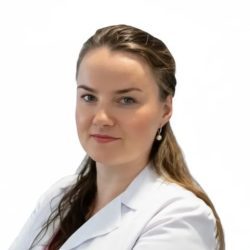
About Dr Markus Nitzschke
Dr Markus Nitzschke is a German double board-certified OB/GYN and Reproductive Endocrinology and Infertility specialist with deep expertise in Natural Cycle IVF and Minimal Stimulation IVF, particularly for women with low ovarian reserve. His clinical approach focuses on low-intervention, individualised IVF strategies designed for patients who may respond poorly to conventional high-dose stimulation.
He trained in the Natural Cycle IVF lineage of Bern, New Hope Fertility Center New York, and Kato Ladies Clinic Tokyo. He has implemented Natural Cycle IVF, minimal stimulation IVF, low-cost IVF and low ovarian reserve treatment models across several international fertility clinics. He currently leads the Natural Cycle IVF, Minimal Stimulation IVF and Low Ovarian Reserve Unit at Instituto CEFER in Barcelona.
Dr Nitzschke is also co-editor of the Springer textbook Minimal Stimulation and Natural Cycle In Vitro Fertilization, reinforcing his academic authority in this specialised field.