Dr Robert Najdecki – Review
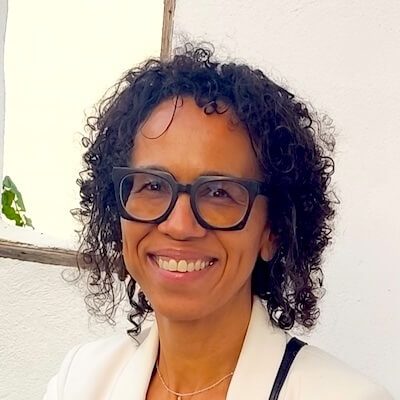
Choosing a fertility specialist is never only about qualifications. For many patients, it is also about feeling understood, especially after failed IVF attempts, miscarriage, poor embryo development, or repeated disappointment without clear answers. In Greece, Dr. Robert Najdecki is one of the fertility specialists known for combining long clinical experience with a strong interest in difficult IVF cases, implantation problems, donor egg treatment, and hysteroscopic diagnosis. He is Scientific Director at Assisting Nature in Thessaloniki.
“Patients with difficult fertility histories often need more than another routine cycle. They need careful thinking, clear explanations, and a doctor willing to look deeper.”

Who is Dr Robert Najdecki?
Dr Robert Najdecki is a reproductive gynaecology specialist working in Thessaloniki, Greece. According to his clinic profile, he has extensive experience in fertility diagnosis and treatment, including endoscopic surgery and more than 6,000 stimulated cycles. His professional background includes work in several IVF settings in Thessaloniki before becoming founding partner and Scientific Director of Assisting Nature in 2013. His profile also notes that he has been active in research, teaching, and peer-reviewed fertility publications.
For patients, this matters because long experience often becomes especially valuable in cases that are not straightforward. When a patient has already tried treatment elsewhere, or when standard explanations no longer feel enough, a doctor with both clinical and research experience can bring a broader perspective to the case.
Interested in Assisting Nature? Read more here >
Why do patients look for him?
Many fertility patients start searching internationally when their case becomes more complicated. This often includes women with repeated implantation failure, couples after several unsuccessful IVF cycles, women considering donor eggs, or patients who suspect that something important may have been missed during previous treatment.
Dr Najdecki’s published work suggests that his main professional interests are closely aligned with these difficult situations. His research includes implantation failure, hysteroscopy before embryo transfer, donor egg cycles, safer ovarian stimulation protocols, freeze-all strategies, and treatment planning in reproductive medicine.
“What many patients want most is not false reassurance, but a feeling that someone is truly investigating the reason treatment has not worked.”
Experience in difficult IVF cases
One of the strongest themes associated with Dr Najdecki is his focus on cases where IVF has not gone as expected. This is important because difficult fertility cases are often not about a single problem. They may involve embryo quality, uterine factors, age-related issues, repeated failed transfers, or a combination of several smaller problems.
His research has paid particular attention to implantation failure and uterine assessment. In one study involving oocyte recipients before embryo transfer, hysteroscopic endometrial fundal incision, called EFI, was associated with improved reproductive outcomes compared with the comparison group. In another publication involving patients after implantation failure, hysteroscopy with EFI was reported to improve pregnancy and live birth rates in egg donor recipients. A further systematic review and meta-analysis that included his co-authorship found improved clinical pregnancy and live birth outcomes when endometrial scratching was performed during hysteroscopy before IVF.
For patients, this does not mean that every woman needs the same procedure. What it does suggest is that Dr Najdecki has a serious interest in looking beyond the basics when implantation repeatedly fails.
A special interest in hysteroscopy and implantation
For many patients, the uterus becomes a key question after failed treatment. Good embryos do not always lead to pregnancy, and one reason can be that the uterine cavity or endometrial environment has not been fully assessed.
Dr Najdecki’s work in hysteroscopy is therefore particularly relevant. Hysteroscopy allows direct visualization of the uterine cavity and can help identify subtle abnormalities that may not always be obvious on ultrasound. In a 2023 retrospective study on oocyte donation cycles, intrauterine pathology was identified in a meaningful proportion of patients, and the rate was even higher among women with repeated implantation failure.
This kind of work may be reassuring for patients who feel their previous treatment was too protocol-driven and not investigative enough.
“Sometimes the next step is not ‘another IVF cycle.’ Sometimes the next step is understanding why the previous ones failed.”
Donor egg treatment and advanced reproductive care
Dr Najdecki is also strongly associated with donor egg treatment. This matters to women with low ovarian reserve, poor egg quality, repeated IVF failure with their own eggs, or age-related fertility decline.
His published review on GnRH agonist triggering in oocyte donation programs describes these protocols as effective and safer, with reduced ovarian hyperstimulation syndrome risk. For donor programs, safety and treatment planning are extremely important, especially in international fertility care where timing, coordination, and predictable protocols matter a great deal.
Patients considering egg donation often want a doctor who understands both the medical and emotional sides of the process. A physician with research experience in donor cycles may feel especially reassuring for those who want detailed explanations rather than general answers.
A modern view of IVF: not just one cycle, but a treatment strategy
Another point that may appeal to patients is that Dr Najdecki’s work reflects a modern view of IVF. Instead of thinking only in terms of one fresh cycle, his research interests include freeze-all strategy, cumulative live birth rates, stimulation protocols, and ways to improve both safety and efficiency in treatment planning.
This matters because patients increasingly understand that fertility treatment is often a process, not a single event. The best doctor for a difficult case is often someone who thinks strategically: how to improve the quality of the attempt, how to reduce risks, how to time treatment well, and how to adapt after setbacks.
“Patients often feel stronger when they know there is a real plan in place, not just another repeat of the same protocol.”
What kind of patients may feel comfortable with Dr Najdecki?
Based on his professional profile and research background, Dr Najdecki may be especially relevant for:
- women considering egg donation
- patients with repeated implantation failure
- couples after several unsuccessful IVF cycles
- women who have had embryos transferred but no ongoing pregnancy
- patients who may benefit from deeper uterine assessment
- people looking for a fertility specialist in Greece with strong experience in difficult or non-routine cases
Patient reviews of Dr Najdecki
“After years of disappointment, I wanted a doctor who would not oversimplify my case. What I appreciated most was the feeling that every step had a reason behind it. I did not feel rushed. I felt that my history mattered.”
Emily, London, age 42, egg donation treatment
Emily’s experience reflects something many donor egg patients want: calm guidance, medical clarity, and a doctor who understands that the emotional burden is often just as heavy as the medical one.
“We were still young, which made our failed IVF cycles even harder to understand. I needed someone who would not just repeat the same treatment. I wanted answers, or at least a more thoughtful approach.”
Anna, Munich, age 33, IVF with own eggs
For younger patients with repeated failure, a careful review of embryo development, implantation, and uterine factors can feel much more reassuring than simply starting over with the same plan.
“I wanted to feel respected, informed, and taken seriously. What mattered most to me was having a clear explanation of the options, the risks, and what the next step would be if the first attempt failed.”
Katarzyna, Warsaw, age 32, single woman, IVF with own eggs
This kind of clarity is especially valuable for single women and international patients, who often want both medical confidence and a sense of structure throughout treatment.
Dr Robert Najdecki may be a very interesting choice for patients who are looking for experienced IVF care in Greece, especially when the case feels complex or emotionally exhausting. His profile suggests a specialist who does not focus only on standard IVF cycles, but also on the difficult questions around implantation, uterine assessment, donor egg treatment, and treatment safety. He works at Assisting Nature in Thessaloniki, where he serves as Scientific Director, and his publication history supports the impression of a doctor with genuine interest in improving outcomes in challenging fertility cases.
“For patients facing difficult IVF journeys, experience matters. But so do careful thinking, honest communication, and a doctor who looks for answers when the path is not simple.”
Watch Dr Robert Najdecki on MyIVFAnswers
Dr Robert Najdecki has also shared his experience with fertility patients through MyIVFAnswers. In a dedicated webinar on embryo implantation, he discusses recurrent implantation failure, uterine factors, embryo quality, PGT-A and the role of further investigation when embryo transfers repeatedly do not result in pregnancy.
Using real patient cases, Dr Najdecki explains why implantation failure can have different causes and why treatment needs to be adapted to the individual patient rather than following the same approach after every unsuccessful transfer.
Watch on MyIVFAnswers: Implantation in IVF – problems and solutions