Dr Natalia Szlarb on IVF: IVF Off The Clock in Alicante

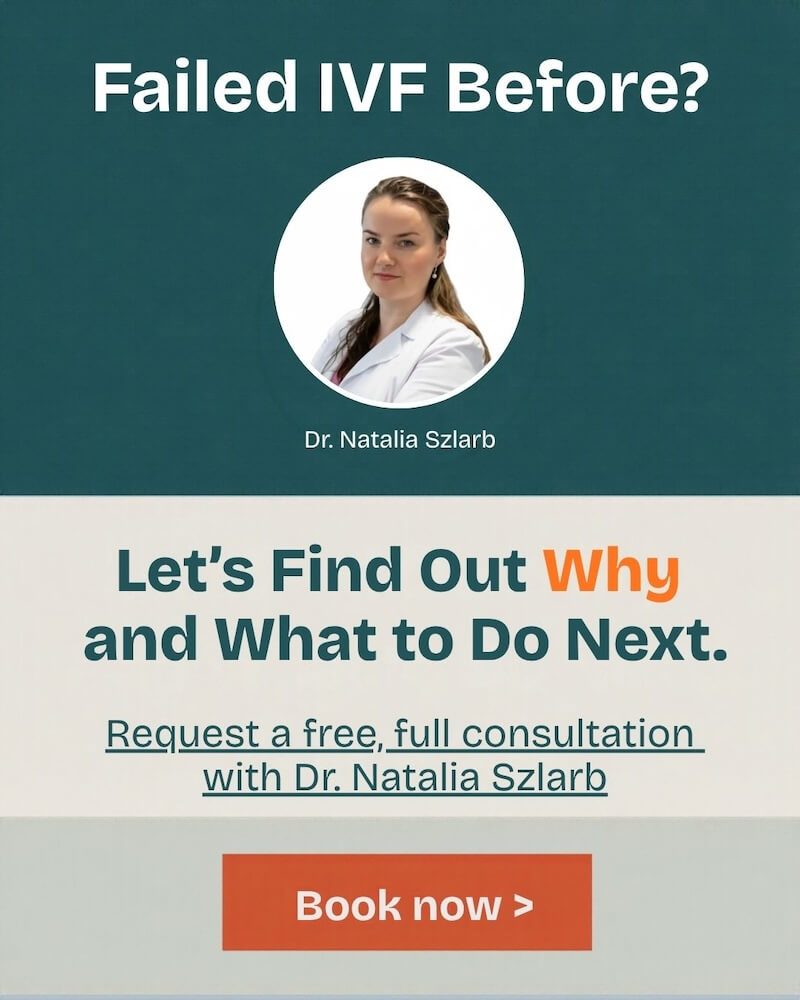
Dr Natalia Szlarb, Fertility Specialist
For many people considering fertility treatment abroad, the biggest challenge isn’t simply choosing a clinic—it’s knowing whether they’ll feel supported every step of the way. From navigating treatment plans across borders to coordinating medication, scans, and appointments from home, international IVF can seem overwhelming. The difference often lies not only in the medical expertise a clinic provides but also in the quality of communication, continuity of care, and the reassurance that patients are never facing the journey alone.
In the first episode of IVF Off the Clock, we sit down with Dr Natalia Szlarb, a Gynaecologist and Fertility Specialist whose international career has taken her from medical training in Poland and Germany to earning a PhD in Immunology in the United States before specialising in reproductive medicine in Spain. Fluent in English, Polish, German, and Russian, Dr Szlarb has dedicated her career to helping international patients feel informed, understood, and supported throughout their fertility journey.
Drawing on years of experience caring for patients from across Europe, Dr Szlarb discusses how personalised treatment plans, multilingual communication, and dedicated patient support help make IVF abroad more accessible and less daunting. She also explains why so many patients travel to Spain for advanced reproductive treatments, including PGT-A and egg donation, and how careful coordination allows much of the preparation to take place before patients even arrive at the clinic.
Watch the full interview below to discover why successful fertility treatment is about more than medical expertise—it’s about building trust, providing reassurance, and supporting patients throughout every stage of their journey.
What inspired you to specialise in reproductive medicine in Spain?
Thank you very much for inviting me to this interview. My journey into reproductive medicine is quite personal. In 2013, I had to relocate to Spain after being diagnosed with a very rare autoimmune disease. I was undergoing chemotherapy in the United States, where I was told I would probably no longer be able to perform major gynaecological abdominal surgeries because my fingers might become too stiff to operate. At that point, I decided to pursue a subspecialty in reproductive medicine. Spain is one of the most advanced countries in the world in this field, so it was the ideal place to continue my career. Coming from the United States, I also saw Europe as a place where countries are only a short flight apart. I realised I could support patients from many different countries and, thanks to speaking several European languages, communicate with them in their own language.
From the beginning, I believed that communication is one of the most important parts of fertility treatment. For many patients, travelling abroad for treatment can feel overwhelming. Being able to speak with a doctor in your mother tongue makes a huge difference and ensures that even the smallest details of your care are managed properly. I also wanted to learn treatments that were less commonly used in the United States because of financial limitations. Spain has long been recognised for its expertise in genetic testing of embryos, particularly for recurrent implantation failure, and it is also a world leader in egg donation. These were areas I wanted to master, and Spain was the perfect place to do so.
Why do so many international patients, particularly from the UK, choose treatment in Spain?
Before the COVID pandemic, we regularly travelled to London and held consultations at an office on Harley Street. I still remember my very first clinic, where I saw only two patients. Just one year later, during our Saturday consultation days, I was seeing around twenty patients. Most of these patients had already undergone several treatments in their own country without success. They wanted answers about why treatment had not worked and what other options were available.
Spanish reproductive medicine often provides those answers. For women of advanced maternal age, one of the key factors is the euploid rate—the number of genetically healthy embryos produced at different ages. This is why many UK patients travelled to Spain for IVF with PGT-A. Another large group consisted of patients with complex fertility histories who came for egg donation treatment, where Spain has extensive experience.
Has your own medical experience influenced the way you care for patients?
Absolutely. When I was diagnosed with my autoimmune disease in 2010, I felt completely alone. I visited doctor after doctor across Europe, and many told me there was little hope. Eventually, I returned to Detroit and was treated at the University of Michigan Rheumatology Centre. One of my colleagues there cared for me in exactly the way I now try to care for my own patients. On one hand, he explained clearly what American medicine could offer me and created a complete treatment strategy. On the other hand, he and his entire team supported me emotionally throughout the journey. I always felt that someone was walking beside me until the day he told me, “You’re healthy now. There’s nothing more I can do for you. Go and live in a sunny country to maintain this miracle.”
That is how I eventually ended up in Spain. The support I received shaped my entire approach to patient care. I wanted to give something back, which is why we offer free first online consultations. It is my way of sharing the gift that medicine gave me.
How do you support patients before they travel to Spain for treatment?
The first consultation is much more than simply reviewing medical records. Of course, we discuss your medical history and create a personalised treatment plan, but we also organise every step of your preparation in your home country. We explain exactly when your period starts, when to begin oestrogen, when to start injections, and how the entire medication schedule fits into your daily life. Patients never go through this process alone. Our assistants carefully monitor every treatment schedule. If you are due for an ultrasound and we have not received your results, they will contact you by phone, email, or WhatsApp to check how everything is progressing.
Our goal is not only to provide excellent medical care but also to support you throughout the entire journey. By the time you arrive in Spain, your body is fully prepared for either egg retrieval or embryo transfer. We also organise practical details such as accommodation and airport transfers, so you never feel alone. We want every patient to feel cared for, comfortable, and as relaxed as possible—as though they are visiting Spain with confidence rather than anxiety.
How do UK patients obtain their medication after Brexit?
This is a very important question. Unfortunately, because of the UK border, we can no longer send medication directly from European pharmacies, as it often becomes delayed or stopped at customs. We hope this situation will improve in the future. To solve this, we work closely with sonographers and medical professionals in London. They perform your ultrasound scans, monitor your cycle, and keep us informed about your progress. Those same professionals also issue the necessary prescriptions within the UK.
There are also UK-based online pharmacies that accept our prescriptions and deliver the medication directly to your home. After your first consultation, you receive a complete treatment package, including your personalised medication plan, prescriptions, consent forms, data protection documents, and a detailed treatment schedule. Our assistants also provide contact details for recommended doctors and pharmacies, ensuring that every part of your treatment is organised smoothly and that you always have support whenever you need it.
Why has Spain become one of the leading countries for fertility treatment?
Spain is very different from many other countries because Spanish legislation allowed anonymous egg donation and genetic testing of embryos back in the 1980s. When you perform these kinds of treatments for more than 30 years, you naturally build the biggest, longest, and most experienced programmes. That is why Spain became such a hotspot for fertility treatment. It is largely because of the legislation, but also because medicine is very much about learning by doing. The more doctors perform a particular treatment, the better they become at it.
Another important difference is that we are allowed to treat patients up to the age of 52. In some European countries, women in their forties are often told, “Oh my God, you’re over 40—you are too old.” We do not discriminate because of age. We treat patients until they are 52.
Between the ages of 30 and 42, the majority of our patients come for IVF with their own eggs and PGT-A. We perform many genetic testing cycles to help patients with recurrent implantation failure or recurrent miscarriages. From the age of 43 until 52, most of the patients we treat come for egg donation. We also treat single women using donor sperm, as well as lesbian couples.
How long do international patients usually need to stay in Spain for treatment?
For patients travelling abroad, the biggest concern is usually logistics. Many patients ask me, “Do we have to stay in Spain for two weeks depending on my cycle?” They start calculating everything according to their natural cycle, and I always tell them, “Listen, no, no, no. Reproductive medicine does not have to follow nature.”
In fact, it sometimes takes us a while to convince patients that we often achieve higher success rates with artificial cycles than with natural ones. The second important point is that we can design your medication plan around your schedule. We can organise your treatment according to the few days of holiday you have available, so this is usually not a problem at all.
In most cases, you only need to stay here for about seven days. During that time, we perform the egg retrieval, fertilisation using either your partner’s sperm or donor sperm, and, when appropriate, the embryo transfer. I always tell patients that they are flying to Spain because it is one of the most advanced countries in the European Union for IVF treatment. But at the same time, they are also coming here for a holiday.
You can enjoy the sunshine, the beautiful beaches, and take time to relax. While you are here, we prepare your body for egg retrieval or embryo transfer. The procedures themselves are very short—usually only 10 to 15 minutes. One or two hours later, you are able to leave the clinic and perhaps enjoy lunch by the beach.
How do you determine whether a patient is a good candidate for IVF with her own eggs?
When we see patients in their forties, we first explain what ovarian reserve is and what the inclusion criteria are for IVF with their own eggs. The answer is very straightforward. We take three important factors into consideration: your age, your AMH level, and your antral follicle count. Your AMH is an excellent diagnostic marker because it tells us approximately how many eggs we expect to obtain during stimulation.
If your AMH is above 2 ng/mL, we consider this a very good ovarian reserve. With a standard antagonist protocol, we would usually expect to retrieve around 15 to 20 eggs. If your AMH is between 1 and 2 ng/mL, we describe this as a diminished ovarian reserve, and we would generally expect around 10 to 15 eggs using the same protocol. When your AMH is below 1 ng/mL, we classify this as a low ovarian reserve, and treatment becomes much more challenging. Age is equally important because women in different age groups produce different proportions of genetically healthy eggs and embryos. For women aged 35 to 36, approximately 50 to 60% of embryos are expected to be genetically normal. Between the ages of 38 and 40, we expect around 30% of embryos to be genetically normal. By the age of 42, we expect fewer than 10% of embryos to be genetically normal.
By combining your age and your AMH level, we can estimate both how many eggs you are likely to produce and what percentage of those eggs may become genetically healthy embryos. For example, if a 30-year-old woman has an AMH of 0.7, she has a low ovarian reserve, but because of her young age, there is still a high chance that one of her few eggs will be healthy. If we have a woman over the age of 40 with the same AMH of 0.7, the situation is very different. She also has a low ovarian reserve, but, because of her age, the probability that one of those few eggs will be genetically healthy is much lower.
How do you help patients decide between using their own eggs and egg donation?
Sometimes miracles happen. Not long ago, we treated a 42-year-old patient from Germany. Everyone had given up on her. During her IVF cycle, she produced 13 eggs, three blastocysts, and one genetically healthy embryo. You cannot imagine the pressure we, as doctors, feel when we transfer that one healthy embryo.
When patients come to us after unsuccessful IVF cycles in their home countries, we explain all of these statistics and numbers. We discuss their age, ovarian reserve, expected euploid rate, and their realistic chances of success. Then we ask whether they would like to continue trying with their own eggs, knowing that they have a diminished or low ovarian reserve and a low euploid rate—that is, a lower number of genetically normal embryos—or whether they would prefer to move directly to egg donation. Of course, if a woman is over 40 but still has a good AMH level, she is likely to produce more eggs. The more eggs we have, the greater the probability that at least one of them will develop into a genetically healthy embryo.
That is why it is generally much easier to treat a patient with advanced maternal age and a good AMH than a patient of the same age with a very low ovarian reserve.
Who should consider PGT-A?
It’s a very good question. In order to perform PGT-A well, we usually need at least six blastocysts to have a good chance of finding one genetically normal, healthy embryo. We generally recommend PGT-A for patients over 38 years old, for patients with unsuccessful pregnancies or recurrent miscarriages, and for patients who have had a long fertility journey in their home countries where PGT-A may not be as well established as it is in Spain.
I always say that to perform PGT-A well, you need not only good technology, but also an excellent embryology team and a strong genetic team.
Why is the experience of the embryology team so important?
It’s not a secret that, with my Eastern European background, I believe that every patient deserves the best possible chance. The embryologists I work with are people who have known me since 2013.
We have an outstanding embryologist who performs embryo biopsies only. He no longer works with eggs, does not perform ICSI, and does not do routine laboratory procedures. He comes to the lab specifically for embryo biopsies and may work from early morning until late at night.
I have not seen this level of specialisation in many other countries where I have worked.
What happens to embryos after PGT-A?
After PGT-A, the embryos must be frozen. For that, you need an exceptional laboratory coordinator who knows how to freeze and later thaw the embryos while maintaining very high quality standards. Our goal is to achieve pregnancy rates of around 60–70% after thawing a euploid embryo.
That is why I always say: you never change a winning team. The people working in the laboratory are experienced professionals who help us maintain consistent results.
Can frozen embryos still lead to healthy pregnancies years later?
Yes, and this has been one of the most surprising and rewarding experiences for me. When the clinic where I originally worked was sold, patients who trusted us followed us to different clinics. Some embryos that had been tested with PGT-A were used for a second child five years later, and they still resulted in healthy pregnancies and healthy children.
This shows how important the quality of biopsy, freezing, storage, and thawing really is.
What is needed for successful treatment beyond the laboratory?
Success is not only about the embryo. You need a professional who knows how to biopsy, another who knows how to freeze and thaw embryos, and a medical professional who can organise the treatment cycle properly.
Patients travel to Spain from all over Europe not simply to enjoy the country. They come with their bodies prepared either to generate embryos or to transfer embryos. You also need a team that manages communication, speaks the patient’s mother tongue, and helps organise accommodation, transportation, and practical details. This is what we try to offer patients with complicated fertility histories: a coordinated path toward having a healthy child.
How do you help patients accept the possibility of egg donation?
Very often, patients struggle emotionally with the idea of egg donation. Some women have already had five IVF cycles in their home country without having a child, yet they still want to try with their own eggs. In these situations, we may offer a cycle with PGT-A to demonstrate whether the main problem is the number of genetically healthy embryos available.
When a woman of 42 or 43 sees that there are no healthy embryos, it can become easier to understand that egg donation may be the only realistic path to parenthood. Communication is essential. The patient must understand not only the medical facts, but also why we are recommending a different option.
How are egg donors selected in Spain?
In Spain, egg donation has been anonymous since the 1980s. Over the years, the legislation has evolved through experience. At the beginning of the egg donation journey, there were serious problems, including children born with genetic diseases such as haemophilia, which led to major legal and ethical concerns. As a result, Spanish legislation became much stricter.
Today, donors are screened for recessive genetic diseases, mental health conditions, and infectious diseases. They are tested not only before the cycle, but again on the day of egg retrieval. The eggs are not fertilised unless the laboratory gives a complete green light. Because of these measures, the process is designed to be as safe as possible for both patients and clinics.
Are fresh donor eggs better than frozen donor eggs?
One thing is personal opinion; another is statistics. I am proud to say that there are laboratories in Spain that achieve very similar success rates with fresh and frozen donor eggs, although these laboratories are not very common. When I first arrived in Spain in 2013, fresh cycles generally had higher success rates. Over the years, freezing technology has improved dramatically, and the gap has become much smaller. What matters most is not whether the eggs are fresh or frozen, but the quality of the laboratory, the freezing protocol, and the experience of the professionals handling the eggs and embryos.
For patients, the most important message is that treatment decisions should be based on evidence, individual circumstances, and the expertise of the team caring for them.
How are egg donors matched to recipients in Spain?
I always tell my patients: if your child does not look like you, you can sue me. I prefer to enjoy my medical life rather than spend it in court with lawyers. According to Spanish law, our goal is to create a child who fits naturally into your family. I often say that we have to find you a “twin sister” — someone with a similar hair colour, skin tone, and facial features. When the child is born, people should naturally assume that you are the genetic mother.
Then you carry the pregnancy yourself. You visit your gynaecologist every month, have ultrasounds, hear the heartbeat, and undergo routine pregnancy screening tests, including genetic screening around weeks 10–12. After nine months of carrying and growing the baby, the emotional bond is very strong. Psychologically, you truly feel like the mother.
Do you have enough donors for patients with different ethnic backgrounds?
Yes, we have a very large donor database in Alicante, with more than a thousand donors available. Before the war in Ukraine and Russia, we had difficulties finding donors with blonde hair and blue eyes. Since many young Ukrainian women have moved to Spain, studied here, and started their lives here, the situation has changed significantly. Many of them freeze their own eggs, and some choose to become donors. This has helped us support patients looking for Eastern European phenotypes. At the same time, Alicante has a long history of Arabic influence, so we also have many Spanish donors with darker hair, brown eyes, and Mediterranean features.
Recently, we treated a patient from the UK with mixed ethnicity and an African background. In such cases, we may use mixed-ethnicity donors from South America who resemble the patient. We are always honest with patients about what is available, and the goal is to find a donor who looks naturally similar to them.
How does artificial intelligence help with donor matching?
Donor matching is supported by artificial intelligence. AI analyses facial structure, proportions, and other phenotypic characteristics and suggests the most suitable donors. However, I never rely on AI alone. Once a week, we hold a meeting with the patient coordinator, the laboratory director, and the egg donation coordinator. Together, we review the options and choose the donor we believe is the best match for the patient.
There are several steps before the final decision is made because we want the child to fit naturally into the family and to avoid doubts or questions in the future.
When do you usually recommend egg donation?
Spanish legislation has allowed anonymous egg donation for many years, and treatment with donor eggs is possible until the age of 52. We usually recommend egg donation when a woman is 42 or 43 years old, has tried the available treatments in her home country, and is still not becoming pregnant. Often, we have evidence that the eggs are genetically abnormal, confirmed through PGT-A, or that the ovarian reserve is very low, there are no eggs, or fertilisation is not occurring.
This is the point at which we discuss egg donation as the option with the highest chance of achieving a healthy pregnancy.
What is your opinion on age limits for fertility treatment?
In many European countries, women over 40 are considered “old” for fertility treatment. Personally, I do not agree with this approach. I believe that age-based restrictions can be discriminatory. Spain allows treatment with donor eggs until the age of 52, and we are happy to support women who still wish to pursue motherhood.
The important question is not simply the number on the passport, but the medical situation, the ovarian reserve, the embryo quality, and the overall health of the patient.
How has egg freezing changed over the years?
A few years ago, egg freezing was mainly offered to women with cancer who were about to undergo chemotherapy. I personally froze my own eggs before chemotherapy in the United States. At that time, there were many different opinions about fertility preservation in oncology patients. Eventually, we understood that women are born with a fixed number of eggs and a fixed potential for egg quality.
The best egg quality is generally before the age of 35. Around that age, approximately 50–60% of embryos may be genetically normal. After 35, and especially after 38, the proportion of genetically normal embryos decreases significantly.
Why do you believe social egg freezing is becoming increasingly important?
The reality is that many modern European women spend their most fertile years studying, building a career, and achieving financial stability. By the time they feel ready to have children, they may be 35, 38, or even older. I come from a family of three generations of gynaecologists. I saw my grandmother’s generation fight for routine cervical screening. I saw my mother’s generation fight for regular mammography screening.
I hope that my generation will help make egg freezing for women under 35 or 36 a normal part of preventive reproductive care. My dream is that in 10 or 15 years, more women will use their own frozen eggs instead of needing donor eggs later in life.
What would you say to women who feel that their options are running out?
Don’t close doors too early. Sometimes society and regulations make women feel that certain opportunities are already behind them. A second opinion costs nothing. An online consultation costs nothing. Looking at the stories of patients from your own country who achieved pregnancy in Spain costs nothing.
Give yourself permission to explore all your options before making a final decision.
How do you support international patients coming to Spain?
Once you decide to have a consultation with us, we help organise the entire process — flights, transportation, accommodation, and the treatment plan. Our goal is that you come to Alicante for about a week, almost as if you were coming for a vacation, while at the same time your body is being prepared either for egg retrieval or for the transfer of donor embryos.
We want patients to feel medically supported, emotionally supported, and practically supported throughout the whole journey.