When Each Patient Case Has Different Needs – Real Patient Case Studies at Ferticentro

Every fertility journey is different; some patients arrive with a long history of unsuccessful attempts, others are just beginning to explore their options, and many are navigating complex emotional and medical situations. The following three case studies show the diversity of situations clinics see every day. They highlight how individualised approaches, tailored stimulation strategies, lifestyle adjustments, and cutting-edge laboratory techniques come together to transform challenges into possibilities. These real patient stories of the clinic Ferticentro show the power of perseverance — and the human side of assisted reproductive medicine.
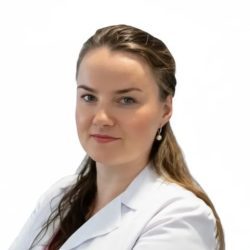
Below, we share three cases guided by Dr Cláudia Zennaro and Dr Giselda Carvalho, experts in reproductive medicine at Ferticentro who dedicate their work to helping families grow.
Patient Case Study No. 1
General description of the case
A 34-year-old woman and her 44-year-old husband sought help at Ferticentro after experiencing an ectopic pregnancy, a miscarriage, and years of unsuccessful attempts to conceive again. Despite the husband’s normal semen analysis and the fact that they had conceived their 5-year-old son spontaneously, they had been unable to achieve a new pregnancy. Both partners were healthy, the woman had regular periods and a BMI of 23.5, and yet they continued to face unexplained difficulties.
Diagnostics
The fertility evaluation revealed that the woman had diminished ovarian reserve, with an AMH level of 0.47 ng/mL. After reviewing the findings and discussing realistic expectations, they chose to proceed with IVF using her own oocytes.
What protocols and procedures were used?
Ovarian stimulation was performed using a short antagonist protocol with a dual trigger. The patient received Pergoveris 300 IU daily for 10 days, along with Orgalutran 0.25 mg starting on day 5 and continuing for 5 days. Final oocyte maturation was triggered with a combination of Decapeptyl and Ovitrelle. Oocyte retrieval was performed on day 12 of stimulation.
What were the results before the embryo transfer?
The oocyte retrieval yielded one mature (MII) oocyte, which was microinjected with fresh sperm from the patient’s husband. This resulted in the development of one good-quality blastocyst, which was frozen on day 5 with a morphological score of A (A BE).
The patient began endometrial preparation on cycle day 2 with oral estradiol at a dose of 6 mg daily. Estradiol was continued at the same dose until day 13, when transvaginal ultrasound confirmed a trilaminar endometrium. Progesterone was then initiated on cycle day 14, 120 hours before the scheduled blastocyst transfer. Estradiol and progesterone were continued for luteal support.
The embryo transfer
The blastocyst, frozen on day 5 of development with a morphological score of A (A BE), was thawed and survived the devitrification process. Assisted hatching was performed and placed in a medium with a high concentration of hyaluronan, specific for embryo transfer, at least 2 hours before transfer. Ultrasound-guided embryo transfer was performed two months after the initial consultation, with an endometrial thickness of 8.9 mm on the day of transfer.
After the embryo transfer
The embryo transfer was successful, and a serum beta-hCG test performed eleven days later confirmed pregnancy. The patient continued her prescribed therapy, and subsequent beta-HCG tests showed healthy progression.
An ultrasound later confirmed an intrauterine singleton pregnancy with a detectable fetal heartbeat. Medications were gradually tapered off as per clinical guidance. At 40 weeks of gestation, the patient delivered a healthy baby boy via spontaneous vaginal delivery.
How common is this situation?
The increasing number of young women presenting with diminished ovarian reserve in the absence of any identifiable pathology is currently a cause for concern. We know that, in such cases, the reproductive prognosis is generally more favourable compared to women of advanced maternal age. Oocyte quality plays a fundamental role in the reproductive success of these patients. However, it is crucial that we further investigate the potential underlying causes of these increasingly frequent cases of low ovarian reserve in very young women.
Final word from the doctor

Dr Cláudia Zennaro, Ferticentro
“This case highlights the critical importance of oocyte quality in young patients with diminished ovarian reserve. While a poor response to ovarian stimulation typically limits the chances of success, it is important to recognise that, in select cases, even a single mature oocyte may be sufficient to achieve a healthy, ongoing pregnancy”, says Dr Cláudia Zennaro.
Patient Case Study No. 2
General description of the case
A 38-year-old single woman came to Ferticentro to pursue her dream of becoming a mother through donor sperm. She had never been pregnant, had regular cycles, and was diagnosed with non-cavity-distorting uterine fibroids. Her BMI of 32.4 placed her in the obese range, which is known to impact response to ovarian stimulation and overall reproductive outcomes.
Diagnostics
As the patient was pursuing solo motherhood through sperm donation, medically assisted reproduction was part of the initial treatment plan. During the fertility work-up, a diminished ovarian reserve (AMH 0.6 ng/mL) was identified, which became an important consideration in the planning of treatment. Additionally, the patient was classified as obese (BMI 32.4), and counselling was provided regarding the importance of weight loss to optimise fertility outcomes.
What protocols and procedures were used?
As part of the treatment plan, lifestyle modifications were strongly recommended with the goal of reducing weight before oocyte retrieval. She was advised to engage in regular physical activity, maintain adequate hydration and follow a balanced diet. Over a period of seven months, the patient lost 8 kilograms, with her BMI decreasing to 27.6. Ovarian stimulation was performed using a short antagonist protocol with a dual trigger. The patient received Pergoveris 375 IU along with Duphaston 20 mg daily for 9 days. Final oocyte maturation was triggered with a combination of Decapeptyl and Ovitrelle. Oocyte retrieval was performed on day 12 of stimulation.
What were the results before the embryo transfer?
The oocyte retrieval yielded five mature oocytes (MII), which were fertilised with donor sperm. This resulted in the development of three good-quality blastocysts on day 5, with morphological scores of A (A BHi), A (A BHi), and C (C+ BHi). All embryos were biopsied for PGT-A and subsequently frozen. PGT-A results revealed two euploid embryos, one of which was transferred.
For endometrial preparation, the following protocol was used: A single intramuscular injection of Decapeptyl 3.75 mg was administered on cycle day 21 for pituitary downregulation. Following withdrawal bleeding, Estrofem was initiated at a dose of 6 mg daily starting on day 2 of the new cycle. A transvaginal ultrasound performed 12 days after starting estradiol showed a trilaminar endometrium measuring 14 mm. Estradiol was continued, and vaginal micronised progesterone was initiated at a dose of 1200 mg daily, administered every 8 hours. Acetylsalicylic acid (aspirin) 150 mg daily was also started. Embryo transfer was performed 120 hours (5 days) after the start of progesterone. Estradiol and progesterone were continued until 12 weeks of gestation, and aspirin was maintained until 35 weeks.
The embryo transfer
One of the euploid blastocysts, with a morphological score of A (A BE), was thawed, survived the devitrification process, and was placed in a medium with a high concentration of hyaluronan, specific for embryo transfer, at least 2 hours before transfer. Ultrasound-guided embryo transfer was performed, with an endometrial thickness of 14,5 mm on the day of transfer.
Embryo transfer was performed ten months after the patient’s initial consultation, as weight reduction was considered an important prerequisite before proceeding. The time required to achieve meaningful weight loss contributed to the overall timeline of treatment.
After the embryo transfer
The embryo transfer was successful, and a serum beta-hCG test performed twelve days later confirmed pregnancy. The patient continued her prescribed therapy, and subsequent beta-HCG tests showed healthy progression. An ultrasound later confirmed an intrauterine singleton pregnancy with a detectable fetal heartbeat. Medications were gradually tapered off as per clinical guidance. The patient is currently in the 18th week of a healthy pregnancy.
How common is this situation?
Cases involving women with diminished ovarian reserve associated with obesity are becoming increasingly common. Obesity alone can contribute to a suboptimal ovarian response to stimulation. Therefore, when obesity is combined with low ovarian reserve, our first strategy is to address and optimise the patient’s BMI to acceptable levels to improve treatment outcomes.
Final word from the doctor
Dr Cláudia Zennaro, Ferticentro
“This case illustrates how lifestyle modification, particularly meaningful weight loss, can positively influence reproductive outcomes. In selected patients, improving metabolic and hormonal balance through weight reduction may significantly alter the prognosis and increase the likelihood of treatment success,” explains Dr Cláudia Zennaro.
Patient Case Study No. 3
General description of the case
A 41-year-old woman and her 44-year-old husband came to Ferticentro after one year of trying to conceive. They had a 6-year-old son from a spontaneous pregnancy and had also experienced a miscarriage at 8 weeks. The woman had regular cycles and a BMI of 21.2. Both partners were in good health but were unable to achieve a new pregnancy.
Diagnostics
Autoimmune screening revealed autoimmune thyroiditis in the woman. It was established that the patient had diminished ovarian reserve, as evidenced by an AMH level of 0.47 ng/mL and an antral follicle count of 6. Their initial plan was egg freezing, but after evaluating the test results, they decided to proceed with an IVF cycle using her own oocytes.
What protocols and procedures were used?
The patient initially underwent ovarian stimulation using a short antagonist protocol with Pergoveris 300 IU and Ganirelix 0.25 mg, with final oocyte maturation triggered by a dual trigger consisting of Decapeptyl and Ovitrelle. Oocyte retrieval was performed on day 16 of stimulation, yielding one mature (MII) oocyte, which underwent abnormal fertilisation. A second stimulation cycle was performed using the same protocol. Again, one mature oocyte (MII) was retrieved. A blastocyst was obtained and biopsied on day 5 of culture, which was found to be aneuploid following PGT-A. Given these outcomes, the patient decided to proceed with oocyte accumulation across 3–4 cycles, if needed, before ICSI with PGT-A.
For the subsequent stimulation, the strategy was modified. Two gonadotropins (Puregon and Pergoveris) were combined, and Duphaston was used in place of Ganirelix. A step-down protocol was implemented, with Puregon 300 IU, Pergoveris 150 IU, and Duphaston 20 mg administered daily for the first five days of stimulation. From day 6 onward, the Puregon dose was gradually reduced to a minimum daily dose of 150 IU. Final oocyte maturation was triggered with a dual trigger using Decapeptyl and Duphaston.
Oocyte retrieval was performed on day 14 of stimulation and yielded seven mature (MII) oocytes, which were vitrified. As the patient pursued oocyte accumulation, the same protocol was repeated in the subsequent cycle, resulting in the retrieval of five additional mature oocytes.
What were the results before the embryo transfer?
The two oocyte retrievals yielded a total of 12 mature (MII) oocytes, which were microinjected with fresh sperm from the patient’s husband. This resulted in the development of six good-quality blastocysts on day 5, and one blastocyst on day 6.
All embryos were biopsied for PGT-A and subsequently vitrified.
PGT-A results revealed three euploid embryos, each with a morphological score of A (A BHi).
The first transfer of an euploid embryo was performed in a modified natural cycle and resulted in a negative.
A second endometrial preparation was carried out, again using a modified natural cycle, this time supplemented with Cyclogest 400 mg every 12 hours, prednisolone, aspirin 150 mg, and enoxaparin 40 mg daily. Embryo transfer was performed 6 days after Ovitrelle administration and 120 hours after the start of progesterone.
The embryo transfer
The euploid blastocyst, with a morphological grading of A (A BHi), was thawed, survived the devitrification process, and was placed in a medium with a high concentration of hyaluronan, specific for embryo transfer, at least 2 hours before transfer. Ultrasound-guided embryo transfer was carried out, with an endometrial thickness of 8.2 mm on the day of transfer.
This marked the culmination of a long process, with the final embryo transfer taking place approximately one year after the couple’s initial consultation.
After the embryo transfer
The embryo transfer was successful, and a serum beta-hCG test performed eleven days later confirmed the pregnancy. The patient continued her prescribed therapy, with subsequent beta-hCG measurements indicating a healthy progression. A later ultrasound confirmed an intrauterine monochorionic/diamniotic twin pregnancy. Medications were gradually tapered according to clinical guidance. The patient is currently having a healthy pregnancy.
How common is this situation?
In cases of diminished ovarian reserve and poor response to ovarian stimulation, even with high doses of gonadotropins, oocyte accumulation before in vitro fertilisation (IVF) is recommended to increase the number of embryos available.
This approach aims to optimise treatment outcomes by allowing for the selection of the best embryos for PGT-A and increasing the likelihood of obtaining euploid embryos for transfer.
Final word from the doctor

Dr Giselda Carvalho, Ferticentro
“Advanced maternal age and diminished ovarian reserve directly impact the quality and quantity of available oocytes, leading to lower fertilisation, implantation, and ongoing pregnancy rates. Still, with individualised ovarian stimulation protocols, high-complexity assisted reproductive technologies, and multidisciplinary support, reproductive success can be achieved—even in cases with a more guarded prognosis,” explains Dr Giselda Carvalho.
Final Words
These three stories remind us that fertility treatment is never a one-size-fits-all journey. Each patient brings a unique medical history, emotional situation, and set of challenges. At Ferticentro, the team believes in looking beyond numbers and statistics and focusing on the person behind each case. Whether it is overcoming diminished ovarian reserve, optimising health before treatment, or navigating multiple stimulation cycles, personalised care can change the outcomes.